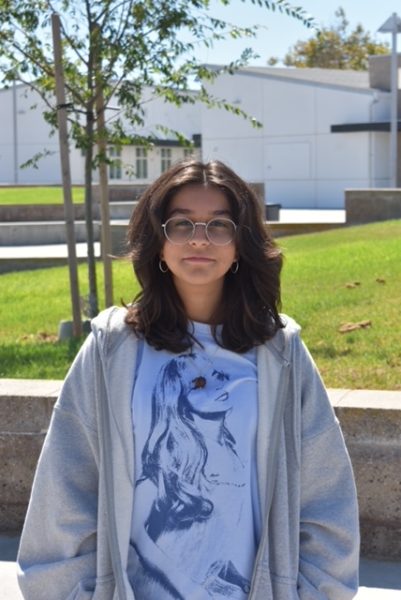

As she scrolled through her Instagram Explore page on a typical Monday afternoon, Fallon Allshire (10) passed through a few videos. First, she saw an intense video discussing a creator’s childhood sexual assault legal case. She scrolled again, landing on a video strongly criticizing a conservative opinion about the Epstein Files. She scrolled to another reel, looking over a news infographic about the climate crisis in Congo.
When Matt Yi (11) scrolled through a couple posts on his own feed at the same time, his first video was a political satire about living in the world’s current political divisiveness. He swiped to the next one and watched a meme about North Korea. He then landed on a video talking about travel advice.
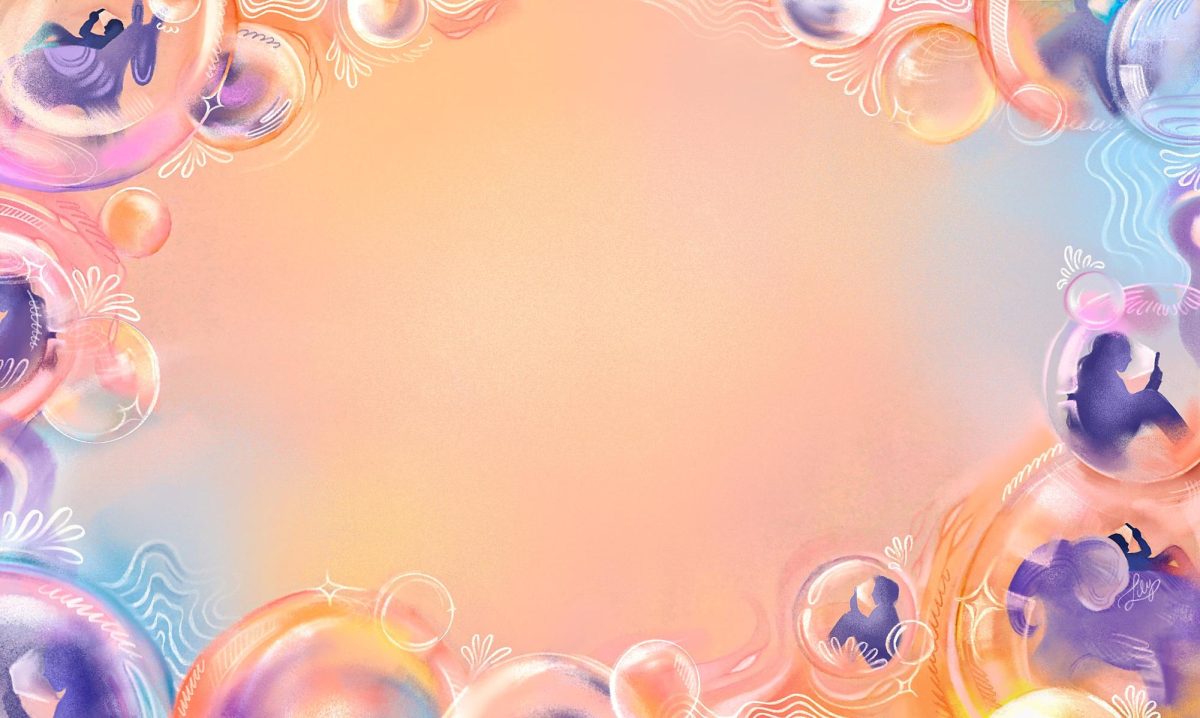
One student’s feed is saturated with overwhelming and dramatic political content, while the other’s feed contains criticism of current events. This contrast is the result of filter bubbles, which are created when algorithms limit a user’s exposure to new viewpoints. According to Meta, Instagram relies on multiple AI-driven algorithms to personalize content to every user to keep them engaged. However, these algorithms intensify beliefs, leading to narrower perspectives and limiting unbiased exposure to information, according to Dr. Carrie James, co-author of the book Behind Their Screens: What Teens are Facing (and Adults are Missing).
She said that filter bubbles caused by algorithms can influence political beliefs and the reception of valid information.
“Social media really affects teens differently based on their strengths, vulnerabilities, and their identities like race, gender, etc.,” James said. “Algorithms can definitely skew perspectives on political issues by only showing posts that align with what you like and might support—creating a distorted view that everyone shares your perspective.”
Yi said that he receives much of his news from social media, though he sees more misinformation about current events online than facts. He said he almost always has to dig deeper to find the real story.
“I try to stay away from politics as much as possible, but I think sometimes the algorithm just wants to recommend you stuff,” Yi said. “Sometimes your friends send you stuff that messes with the algorithm too. I’m a very strict moderate—a centrist, almost. I see a lot of political satire or humor on there. It does kind of gear towards [my] beliefs, but I think I’m pretty aware of what’s going on. A lot of times social media does kind of play into how you get your news. Sometimes it just sounds really absurd, or you’re just not sure if people are joking or not, because there’s a lot of either AI-generated stuff or some people are just making satire. So you have to really check whether people are lying to you or not.”
Psychology teacher Christopher Fousek said that on top of being shielded from truthful information, filter bubbles create risk of polarization.
“Filter bubbles lead directly to the gaps in not seeing fully the points of view of other people; they lead to very black and white, so to speak, perspectives of people,” Fousek said. “It’s a pretty natural human tendency to simplify the world around us, and this results in a lot of ‘us versus them,’ tribal kind of mentality. With the reality that our filter bubbles create for us, this only assists in increasing the likelihood that we develop that tribalism and that we make quick assumptions about who our enemies are and what team we are on.”
Because social media can quickly spread misinformation, Hiba Salam (10) said the inherent bias in algorithm-driven content is harmful.
“The difference between actual news and social media is [that] social media is a lot less filtered than the actual news, and it’s [biased],” Salam said. “Obviously, there’s still rules and regulations as to what you can post, but people aren’t afraid of showing their viewpoints and their realities, and a lot of it can come off as really unfiltered at times, which makes people have stronger reactions.”
When scrolling through Instagram reels about the Epstein Files, Allshire saw numerous posts regarding the mention of Lifetouch, a photo company taking student pictures, in the files. When Allshire researched further into the topic, she learned that the posts were blowing the issue out of proportion.
“[Media literacy] has been a big problem I’ve been seeing lately, and I’ve tried to break that cycle by fact-[checking] what I see,” Allshire said. “If I am to read [something], I check what their stance is before I read it, and then I make my stance based on what I read. So I usually [look at] independent journalists, rather than social media. Being educated and spreading awareness is really good until it’s misinformed, or until you assume something.”
Fousek said that news outlets often prioritize profit over accuracy.
“There’s a combination of a lot of bias that’s built into sensationalized stories for profit and media that is capitalizing on fear,” Fousek said. “There are news sources that are doing their jobs and are reporting news, fact checking, and being honest—trying to build as little bias into what they do as possible. There are others that are entertainment and horse-race journalism that are trying to incite and instill fear and hatred regarding the other side.”
To increase media literacy, Texas A&M Communications and Journalism Studies Professor Natalie Stroud said self-awareness is the first step.
“Sharing the importance of being accurate and fairly considering different viewpoints can be useful,” Stroud said. “Also, figuring out ways that people feel accountable—perhaps they have to justify their view to someone with a different opinion—can help people be more even-handed.”
Since algorithms echo a user’s beliefs back to them, users may develop a confirmation bias, in which people overlook opposing opinions in favor of information that supports their beliefs, according to James. Allshire experiences this when she engages in conversation.
“When you see an opinion different from yours, you just flip out,” Allshire said. “In the current day, when your algorithm is just [your own beliefs], you have almost no disagreements [to those beliefs], and then when you’re in real life and someone disagrees with you on a specific thing, you don’t know how to react. I’ve debated with a grown adult, [and] at one point, he wouldn’t be open to what I was saying. Even if I gave him a source, he would [cover] his ears.”
According to a 2022 paper, Echo Chambers, Rabbit Holes, and Algorithmic Bias: How YouTube Recommends Content to Real Users, platforms like Youtube push users into narrow ranges of ideological echo chambers, partially limiting what users can see. In middle school, Malia Meng (10) said that an echo chamber influenced her political beliefs, prompting her into a conservative viewpoint.
“I [was recommended] one of [Brett Cooper’s] videos on YouTube one day, and she just started talking about regular commentary things,” Meng said. “I kept watching her videos. She’d be like, ‘Yeah, I hate trans people. Trans [women] are just men, and they need to actually get a grip.’ Since I was young and impressionable, I believed it. When she started saying that, ‘Oh yeah, Donald Trump really wasn’t that bad,’ I [thought], ‘Oh, that was weird,’ because even though I was on the conservative side, I still didn’t like Donald Trump. Hearing [that], I [started] thinking for myself. She still pops up on my feed and once in a while I’ll click a video, but now I’ve just been disillusioned with all of it.”
Salam said that because of the unfiltered content on social media, it becomes difficult for her to accept other viewpoints that are so starkly different from her own.
“I think [an unfiltered social media] is important,” Salam said. “But at the same time, when stuff is that unfiltered and that raw, and people are seeing pictures and videos of children in Palestine, it makes them angrier. Those emotions are going to make it harder for us to speak about it with people who are on opposite standpoints, because then all we can see in our mind’s eye are those children who are dying. And it’s like, ‘Why don’t you feel the same way as I do? There are literally kids dying.’ It actually stops you from being able to see other people’s viewpoints and [stops us from creating] the change needed to get people on the same page.”
According to the Pew Research Center, 53% of the US population gets their news from social media platforms like Twitter, Instagram, and TikTok. James said the inherent negativity caused by aggressive online discourse influences students to feel a lack of motivation to become thoroughly educated. In addition to this, those who do consume political content can become increasingly stressed as their algorithms feed them ever-more disturbing news and images.
“If the algorithm becomes too skewed so that the majority of content is related to one topic of interest, it can backfire and create pressure and stress,” James said. “Teens both appreciate the opportunity to like and repost content related to political issues they care about, but their feeds can cause burnout and the feeling that they aren’t doing enough to help or feel overwhelmed and even traumatized by emerging news.”
Salam said she has experienced this when she noticed how her algorithm impacted her mental health.
“There was one night where my entire for-you page was just about the Epstein files,” Salam said. “And it wasn’t unbiased stuff; it was really haunting images with really haunting audio in the background. I couldn’t stop scrolling [until] 2 a.m. [When] you’re just constantly feeding yourself that sort of imagery and feeding yourself negativity, even if it’s important, obviously it will still affect your mental health.”
While filter bubbles can be overwhelming and dangerous, there are ways to combat them. In 2025, Meta added a feature to Instagram to “reset” suggested content and see fresh content. James said that a way to avoid filter bubbles is intentionally seeking out information instead of letting the algorithm pick what you see.
“Teens are definitely aware of how their online feeds tailor content to their perspectives,” James said. “In some cases, they appreciate that and prefer to keep it that way because then social media becomes a place to feel support for a particular cause, stance, or identity that can feel under attack. But some teens struggle with the downsides—feeling like they’re not learning about or hearing from the other side. These teens try out strategies to hack their algorithm, intentionally liking or searching for content that offers very different perspectives or being intentional about seeking out news sources that are from the other side of the political spectrum.”
Salam said she believes that despite current political polarization, Americans can disregard division in order to work towards a better future.
“I [don’t think] everyone has to agree with one thing,” Salam said. “And I think in a sense that the digital world has become an outlet for our physical world in so many different ways, and so you can choose how to use it. The agendas that they’re pushing are trying to suppress us as a human race altogether, and my wish is for people to be able to stand up and say, ‘Hey, no matter what your views are, we should all take a stand together and advocate for those rights that we have as human beings.’”