

Felipe Storelli (12) repeatedly clicked the refresh button at the top of his SDSU student portal, waiting for the application update that would determine the next four years of his life. Once he saw that his status had been updated—with his family beside him—Storelli opened the update. Black and scarlett confetti sprinkled down his screen while cheers filled the room and relief filled his heart.
Just two years ago, Storelli couldn’t even imagine applying for college. He said he spent his freshman and sophomore years barely passing his classes and struggling to find motivation in school because he didn’t believe he had a future.
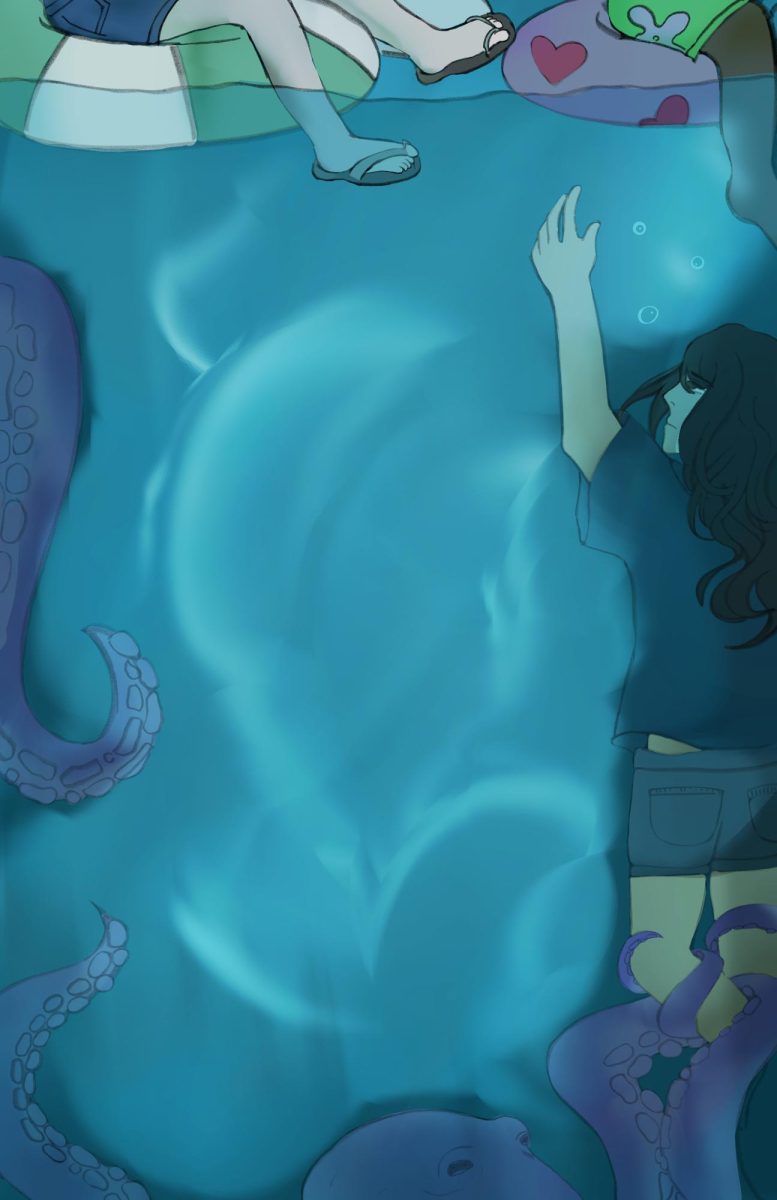
“I had a really hard time knowing what to do with myself,” Storelli said. “I would just doom scroll all day, procrastinate as much as I could, and make excuses for why I didn’t do homework. I didn’t have a drive for anything; I didn’t have a drive to study, find extracurriculars, or do things that would affect my future. At that point, I didn’t think I had anything.”
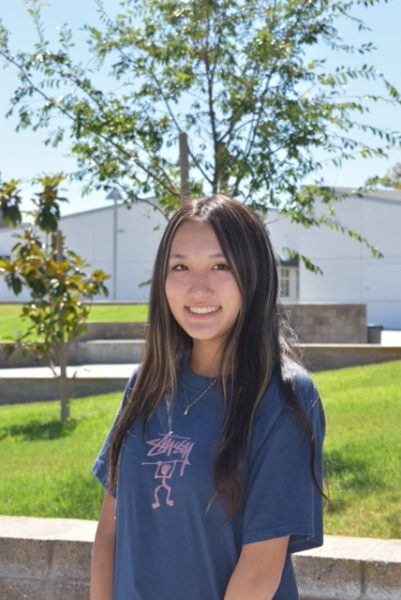
Similar to Storelli, Serena Lee (12) struggled to find motivation throughout her freshman year. Living in Cambodia, she found that connecting with peers didn’t come easily, noting that it was difficult to talk to classmates and carry out daily conversations. In her sophomore year, Lee was home-schooled and further isolated from others.
“Growing up, I was a very shy person,” Lee said. “I found it really difficult to talk a lot of the time. Freshman year was a moment where I plummeted because I didn’t have enough self-confidence to speak. Not just speaking out loud, but also speaking up for myself and speaking about things I care about. Then, in my sophomore year, when I was home-schooled, there was a lot of inaction where it didn’t feel like I left the house much, and I didn’t have much going for me.”
Both Lee and Storelli admitted that inaction consumed their early years of high school. Whether it was not being proactive academically or missing out on possible friendships, they said they regretted the actions they failed to take.
According to psychologist Dr. Mary Lamia, people typically regret their inactions more than their actions. She said it is often difficult for people to take initiative and climb out of their mental potholes of stagnation.
“Sometimes people feel so lost, they may not make the effort to change, take action, or do something different because they may not have the emotional motivation to do it,” Lamia said. “A lot of what we do is buried in something called implicit memory, the memory that occurs without conscious processing or recognition of how we behaved in the past. It causes us to keep making the same mistakes or practicing the same habits.”
According to alumni Robbie Gray (’25), when he was a high school student, there were many moments when he felt less confident in himself because he was unable to find motivation. Gray said this subconscious stagnant mind made him oblivious to how much time he was losing, which affected his learning throughout his high school years.
“My [regret from] high school is how much pain it causes when I lived life with so little reflection,” Gray said. “You fall into all these potholes without actually realizing what’s going on; you just blame the world. It’s not a fun existence, you don’t accomplish as much, and you’re less secure in yourself.”
According to Lamia, the most common emotion associated with regret is shame, and facing those feelings can be especially difficult.
“One of the things we have to learn to do is to sit with our feelings and accept them,” Lamia said. “It’s hard to accept some of what we feel, especially if it’s a kind of toxic emotion that makes us feel so bad about ourselves. When we learn from regret and when we choose something, that’s cognitive, and that comes from thinking and is motivated by emotion. The real thing we can learn from is shame. There is an emotion theorist named Dnoal Nathanson who said, ‘Shame is the greatest teacher because it makes us look inside ourselves and think deeply about ourselves.’”
Entering harder classes in junior year, Storelli wanted to prove to himself against his previous self, who only knew failure. Storelli said he began to rethink what he wanted for his future as he matured and reflected on how much time he had already lost.
“I used to check my GPA and see how extremely low it was compared to everyone else,” Storelli said. “I felt awful. Westview is so academically competitive that almost everyone has above a 4.0 GPA. I felt left out. In junior year, I signed up for a lot of AP classes, and I realized that I was going to be an adult in about two years, and I was [also] going to graduate. I needed to do something now, or else it was just going to keep eating me alive; that was the motivation, thinking about the future. I realized I didn’t want to be mediocre, I actually wanted plans for my future, and I was capable of doing something, and that drove me to actually start working.”
Another factor that motivated Storelli was taking APUSH in his junior year. He started off doing very poorly in the class; however, knowing he was in the second half of his high school career, he no longer wanted to swallow the shame of his grades slipping through once again. Instead of defaulting to excuses and finding comfort through blame, Storelli started to change his habits. He put aside more time to prepare for quizzes, re-read his essays a couple more times before submitting, and increased his in-class participation. Through self-reflection, Storelli was able to find his motivation. Lamia notes that although everyone finds motivation in different ways, the impetus for change stems from our acknowledgment and acceptance of emotions.
“You need the motivation provided by emotion in order to make you do something and motivate action,” Lamia said. “Why you change is especially important. [Often] you use something else to help you with that, maybe some kind of reward or affirmation from someone else. There are all kinds of things that make us change, and how we change is first through contemplation and finding why and what we want to change.”
While living in Cambodia, Lee said she often regretted the words she didn’t say or the people she never got to know.
“I tend to regret the unspoken words a lot,” Lee said. “There are so many thoughts we all have, and we always want to get them out. But for me, I tend to lose the opportunity to say certain things. It could be something as small as having something to say during a Socratic Seminar, and I chicken out, or something I wanted to say to a friend, but never got to say. But there are also larger things, like asking for opportunities or even asking for help. There are so many unspoken words that we have, and I felt like I had lost because I never got that chance to speak them.”
When she moved to America, Lee said she made a conscious attempt to express herself more through the words she wouldn’t normally say.
“Coming [to America], I wanted to voice all my thoughts,” Lee said. “That’s something I’m still working on. I still chicken out when we do lit circles in class, and there are still words that are unspoken and hang in the air. But I’m slowly discovering how to take those words and give them a voice as well.”
Lee’s journey to improve her speaking skills has led her to become the speech captain of the speech and debate team and to open her own literary magazine. She said the activities she’s poured herself into stemmed from her desire to express herself more clearly with words, and as a result, she discovered how powerful using her words can be.
“I started my literary magazine, where I was helping myself and other people have their own voices shared,” Lee said. “I realized that was something that felt pretty good, and I wanted to keep talking and finding ways to make other people talk. The idea of talking, speaking, and listening is what propelled me forward because I wanted more of it; I didn’t have it before. Coming here, I knew I wanted to make a lot of connections, so I also joined different clubs like speech and debate. Everything started to blend; in speech and debate, I’m giving a speech to the judges, [it has] that notion of speaking and being listened to, and I wanted to make a difference, which also goes into how I just act in my daily life, in the small ways. Even if it’s me just holding open somebody’s door or asking how their day has been, that’s speech and debate as well.”
Storelli took a total of four APs during his junior and senior years and became vice president of Mock Trial. He committed to SDSU for international security and conflict resolution, and plans to go to medical school to study psychiatry.
“Everything worked out at the end,” Storelli said. “I do feel regret because I did waste a lot of time. [But I’ve learned that] everything has a consequence. Even if I skip class once or miss a homework assignment once, that could have consequences, that could lower my GPA and stop me from getting into grad school. Every action matters. I’m really excited for my future, but also looking back, I want to make sure I don’t make those same mistakes again.”
According to Gray, there were many moments throughout high school when he was consumed by his inactions. Whether it was pushing his own responsibilities onto others or being ignorant of his own mistakes, Gray consistently shut down opportunities for growth and learning. His turning point away from constant inaction stemmed from his discovery of how thought-provoking reading could be.
“Going into freshman year, I was not a reader at all,” Gray said. “I had issues in my life because I wasn’t very ponderous. I didn’t reflect on many things. I just had issues, moved forward, and if they made my life worse, then that’s just how it was. I didn’t have many tools to solve these issues. As I became more of a reader and a more reflective person in high school, I would think more about my life, the kind of person I want to be, and where I’m going.”
Gray said looking back at the opportunities he missed in high school has taught him to reflect on his actions and consider the changes he wants to make.
“There were plenty of things I could have done freshman year that I didn’t do because I was not disciplined,” Gray said. “I made a lot of excuses for myself, I was emotionally volatile, and I would get angry or frustrated about different things or blame things on different people. Looking back at all the experiences I’ve had, it’s taught me what I want to be and what opportunities I should go after. Now, I do a better job reflecting inwardly and thinking about what I could change.”
As the school year comes to an end, Lee said she feels proud knowing she was able to learn and grow from her inaction. She hopes to continue finding her voice as she moves forward into college.
“I want to take the spirit of wanting to speak and be listened to into college,” Lee said. “Thinking about all the unspoken words and conversations I lost motivates me to want to make up for all of that in the future by continuing to reach out to people and try my best to make connections. My freshman self would be so proud of how far I’ve come. All I wanted was to be seen, [heard], and outspoken. I think I’m doing all of that now.”