
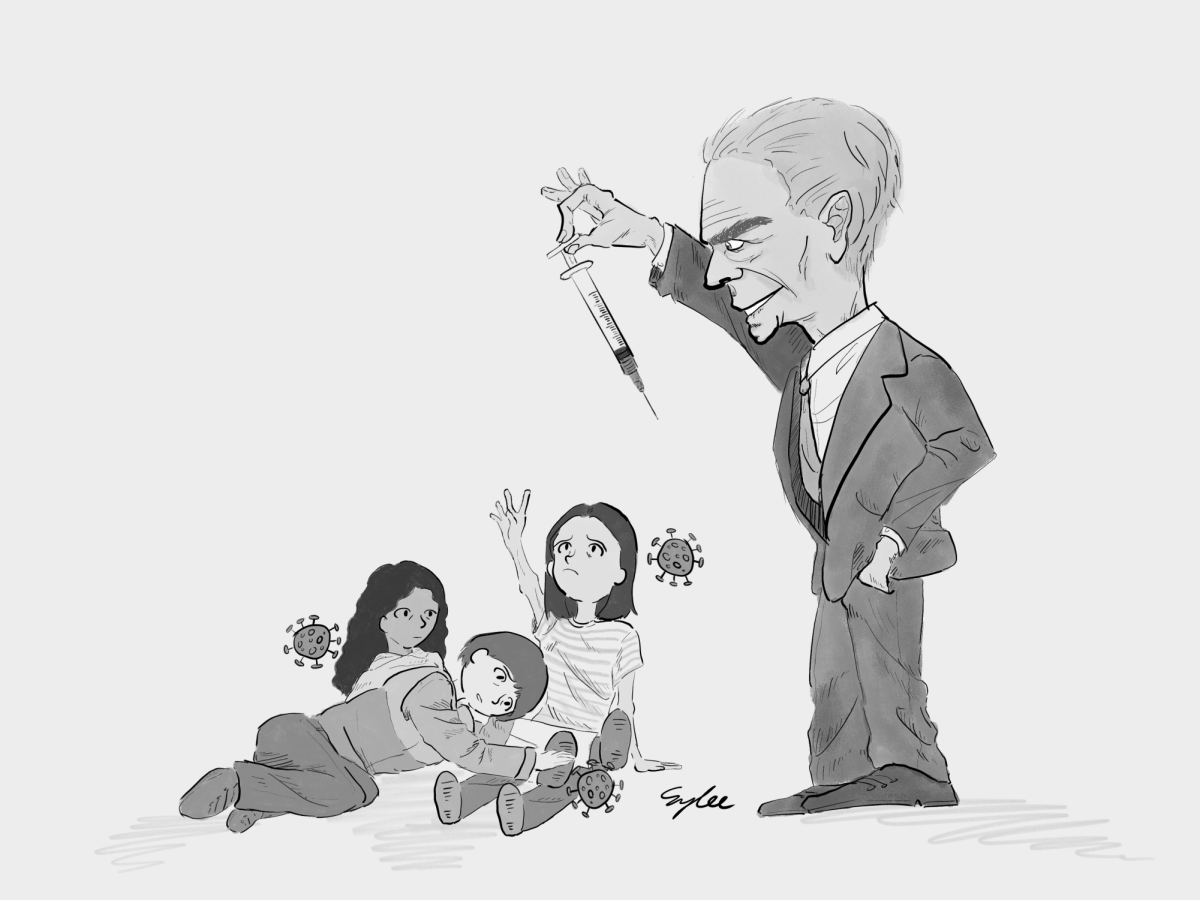
Secretary of the Department of Health and Human Services (HHS) Robert F. Kennedy Jr. (RFK) made a radical and dangerous change on Jan. 4. He altered the vaccine immunization schedule for Americans under 18 by reducing the recommended list of vaccines from 17 to 11.
This change to the vaccine schedule will harm public health by triggering lower vaccination rates, reducing access, and causing confusion.
The six vaccines that were taken off of the schedule for all children are Respiratory Syncytical Virus (RSV), Hepatitis A, Hepatitis B, Influenza, Meningitis, and Rotavirus. They are now recommended for high-risk groups only. This greatly decreases the access the public has to these vaccines. If parents want their children to get one of these previously recommended vaccines, they now must directly get approval from their doctor and wait for their insurance provider’s approval before receiving the vaccine. For some, this is a minor inconvenience, but for the majority, these obstacles are likely to dissuade people from receiving important vaccinations.
The HHS reportedly made this decision to align the U.S. vaccine schedule with other wealthy countries like Denmark, Germany, and Japan, which only recommend 11 vaccines. The issue with this reasoning, however, is the differences between America’s healthcare system and these other countries’.
Denmark, Germany, and Japan all have universal healthcare which, according to a 2020 study done by the NIH, leads to an overall healthier nation. A country that provides healthcare to all its citizens is more prepared to treat those with serious diseases and prevent outbreaks, thus needing fewer vaccines.
On top of that, both Denmark and Germany have mandated sick days, meaning employers across the country are required by national law to give employees paid sick leave to recover and get adequate care. However, the U.S. doesn’t federally mandate paid sick days, allowing states to individually decide their policy.
Doctors’ offices obtain their vaccines from pharmacies who send them the correct amount based on their previous number of vaccines used. If patients don’t request vaccines that are only recommended for high risk groups, the doctors’ office won’t have the supply to vaccinate everyone in case of an outbreak.
States also have the power to decide which vaccines are actually required for children to take, but since the CDC, which is overseen by Kennedy’s HHS, has long been relied upon to be one of the most trusted sources when it comes to vaccines, many states based their recommendations on the CDC’s guidance.
However, that guidance is no longer credible. Because of this, California, Oregon, and Washington formed a West Coast Alliance that is aiming to provide its own recommendations for its residents. Their guidance will likely differ from the HHS due to the lack of scientific evidence in Kennedy’s new policy shifts.
It is likely that other states will also follow suit, creating commissions to be in charge of their own state vaccine requirements with proper research.
This vaccine change was a stealth announcement, meaning that people can’t look at the research backing the change in policy.
However, with the nation’s “most trusted” source of medical information contrasting with that of individual states, many citizens are now skeptical about which guidelines, if either, to follow.
The confusion caused by RFK’s new vaccine recommendations leaves the American public with much confusion, leaving them to choose between trusting federal guidelines, which have been reliable for decades, or listening to local government’s regulations, which have clear scientific evidence.