
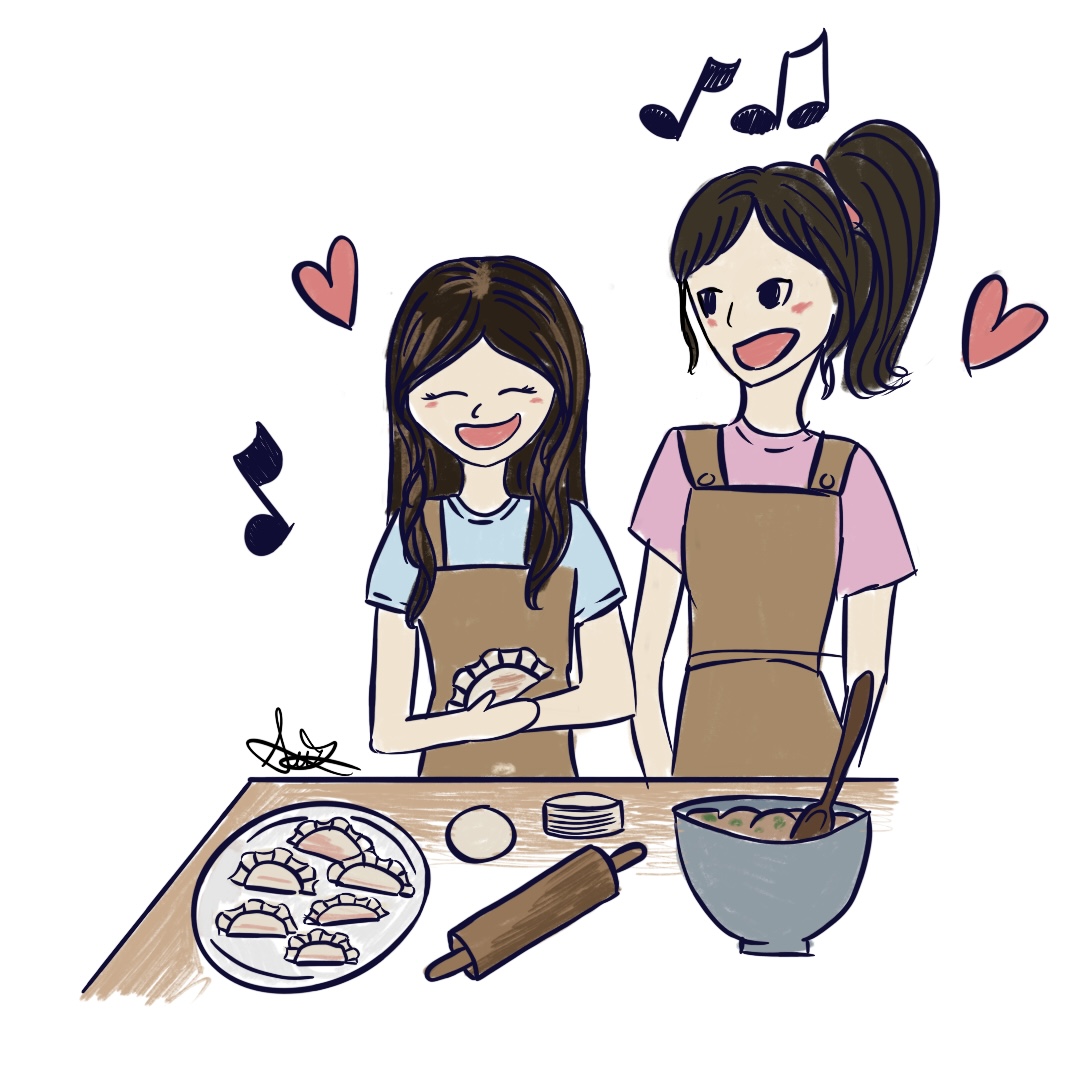
The familiar aroma of hand-rolled dumpling skins wafts through my house early in the morning while the sound of fresh pork being pounded takes over my otherwise quiet kitchen. Stations are set up in accordance with the steps of making dumplings: kneading the dough, stuffing the dumplings, sealing the skin, and boiling the identically shaped flavorful sacks. This is my Thanksgiving morning.
My family never followed stereotypical holiday traditions. We never dressed up to go trick-or-treating on Halloween, ate stuffed turkey and mac-and-cheese for Thanksgiving dinner, or decorated a Christmas tree. To outside eyes, the absence of these practices may seem like unfortunate holes in my childhood memories, and for many years, I thought so too.
I begged my parents to let me dress up as Rapunzel and roam the neighborhood at night, I tried dragging my dad to the Costco freezers filled with turkeys, and I dreamt of a house decorated with green and red frills with a light-up tree to top it all off. But, despite my efforts, my family never celebrated the way I thought holidays should be celebrated.
For many years, I believed there was only one correct way to participate in any holiday—the traditional way. I failed to see the beauty in personalized traditions and celebrations that weren’t shared by millions of others. Coming back from school breaks, my teachers would ask for our favorite part of the holidays. I was embarrassed to share out loud about my unique traditions when everyone else spoke about their favorite gift, giant turkeys, and scary Halloween costumes. I would often lie, boasting about gifts I didn’t actually receive and mounds of candy I never collected. I wasn’t only lying about the “different” way my family celebrated holidays, but I was also subconsciously internalizing the idea that being different was bad. My face would heat up in embarrassment when questioned about what I did for Christmas or what I was going to dress up as for Halloween. I hated the fact that my childhood experiences growing up were widely different from anyone else.
On the Thanksgiving of 2023, my family decided to do a potluck where each person cooked their own dish to share. Despite having the freedom to make something in accordance with the common Thanksgiving dinner traditions, I found myself wishing we had spent the day making dumplings like we normally did. My longing for the familiarity of old traditions made me realize it no longer mattered if our celebrations mirrored those of our neighbors. The true significance of holidays lies in being able to continue the personal traditions that created so many unforgettable memories growing up.
Instead of trick-or-treating, my parents dedicated Oct. 31 to pumpkin pie and movie-watching. Instead of turkey for Thanksgiving, we feasted and gave thanks with dumplings and Chinese-style lamb chops. On Christmas, we bonded over board games and cried over whatever sentimental movie my dad decided to play for us.
I used to think that without the gifts or candy, I was missing out on everything the holidays had to offer. I believed I was being stripped of those happy memories. However, when I look back to all these moments, I don’t see anything missing. Instead, I remember the unstoppable laughter and sweet smiles of my family.
After battling the desire to conform to the picture perfect holidays for years, I’ve learned to appreciate the way my family celebrates. From this, I’ve also grasped the concept of accepting my differences. Every memory I’ve made is dappled with specialty and joy.