
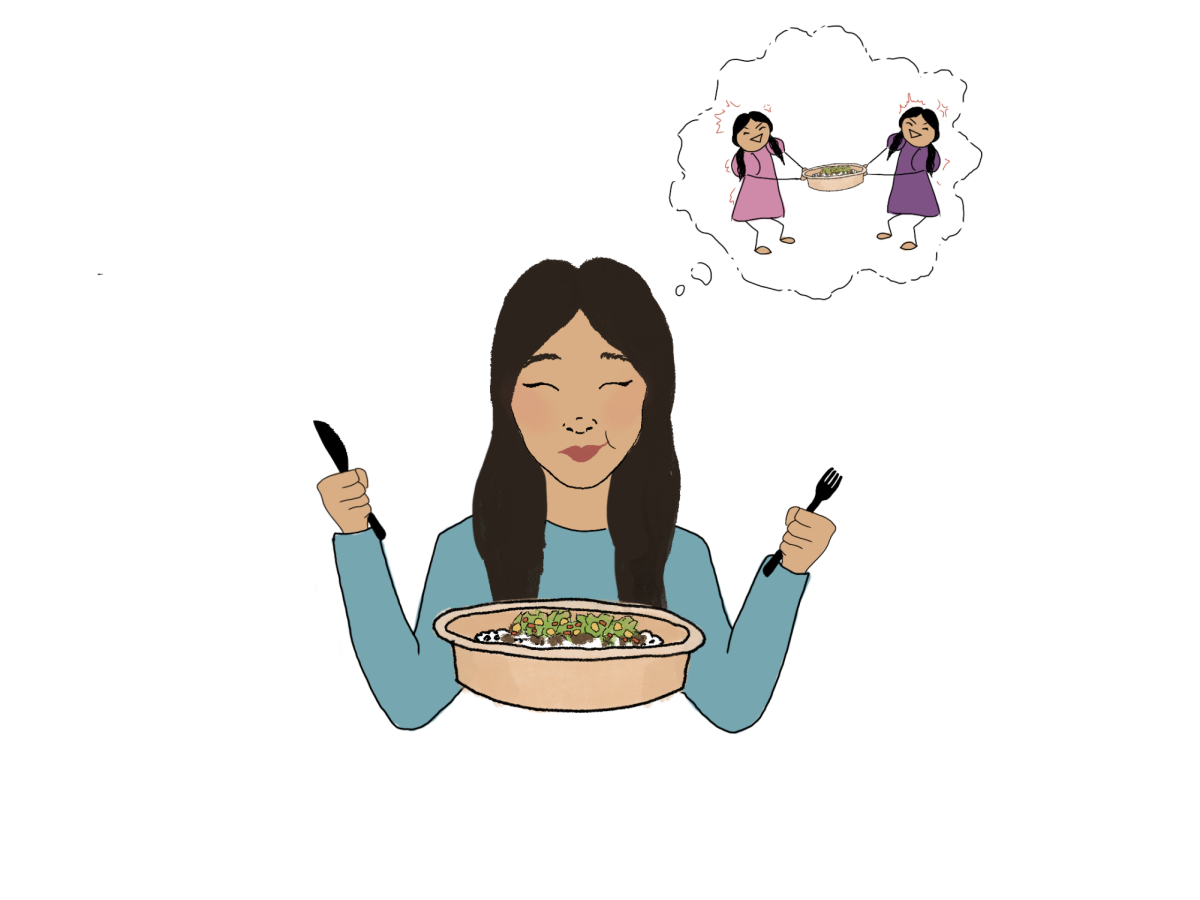
Sitting down at my kitchen island after a long day, there’s only one thing I’m craving: 炒饼 (Chǎo bǐng). The traditional Chinese delight balances strong seasoning with naturally sweet green beans, served with bright green stems and toasty strips of dough poking out all around. This dish is deeply rooted in every family’s personal preferences and no two versions completely match up. Ever since I can remember, 炒饼 had been my favorite dish, specifically the one my grandpa makes. He always slices the dough strips extra thin to maximize the absorbance of sauce, measures a perfect 1:1 ratio of dough plus green beans, and tops the bowl with a shower of fermented garlic. This mouth-watering bowl of bursting flavor is my comfort food, and every bite takes me back to my 5-year-old self eating it in my grandpa’s lap.
Although I find great joy in trying new foods from different cultures and places, the nostalgia certain dishes bring keeps me close to my own culture and cultivates my relationship with others.
I often step into restaurants searching for the homemade and authentic flavor of my favorite foods. As my grandparents live out of state, it’s been a goal of mine to find a place that can replicate the taste of their kitchen treasures. I crave that spoonful of goodness that can send me back to my favorite childhood memories. This emotional connection triggered by food is often referred to as food nostalgia.
According to Autumn Swiers, a writer in the Tasting Table, biologically, “the brain subconsciously associates these tastes with good memories,” and in return, “you get a double hit of dopamine from both the pleasant flavor of the food and the feeling of the memory it evokes.”
Familiar and delicious foods not only connect with our stomachs, but also function as a trigger to the hippocampus, the part of the brain that is responsible for memory recall. More specifically, the Proust Phenomenon happens when the brain revisits memories associated with related senses such as taste. This term is named after the French writer Marcel Proust, who described how the taste of a madeleine had brought him back to fond childhood memories.
Swiers also said that food nostalgia can build a feeling of togetherness, as fond memories are more likely to sprout from the influence of other people. Remembering these positive people and experiences often helps to relieve loneliness and isolation.
Food nostalgia has a strong influence on people’s cravings. The feelings of separation from my family back in China began influencing the foods I wanted to eat. I started asking my parents for specific dishes like fried pancakes, egg and tomato noodles, and peking shredded pork. I found that everything I was craving had fond memories attached to it. 炒饼 reminded me of my grandpa, eggs and tomatoes brought me back to late night family dinners after practice, and my dad’s famous shredded pork evoked memories of the card games my family played during meals. These dishes hold the support I’ve received over the years and the connections I’ve built with loved ones. I’m always eager to go back to my family’s hometown to visit my grandparents, where I know I’ll always be met with a bowl of love.
Not only has food nostalgia reminded me of numerous relationships I have fostered with the people in my life, but it also connected me more deeply with my Chinese culture. My appreciation for the fantastic foods around the world is unquestionable, but to me, nothing is better than the taste of authentic home-made Chinese food that evokes the fondness I have for my family.