
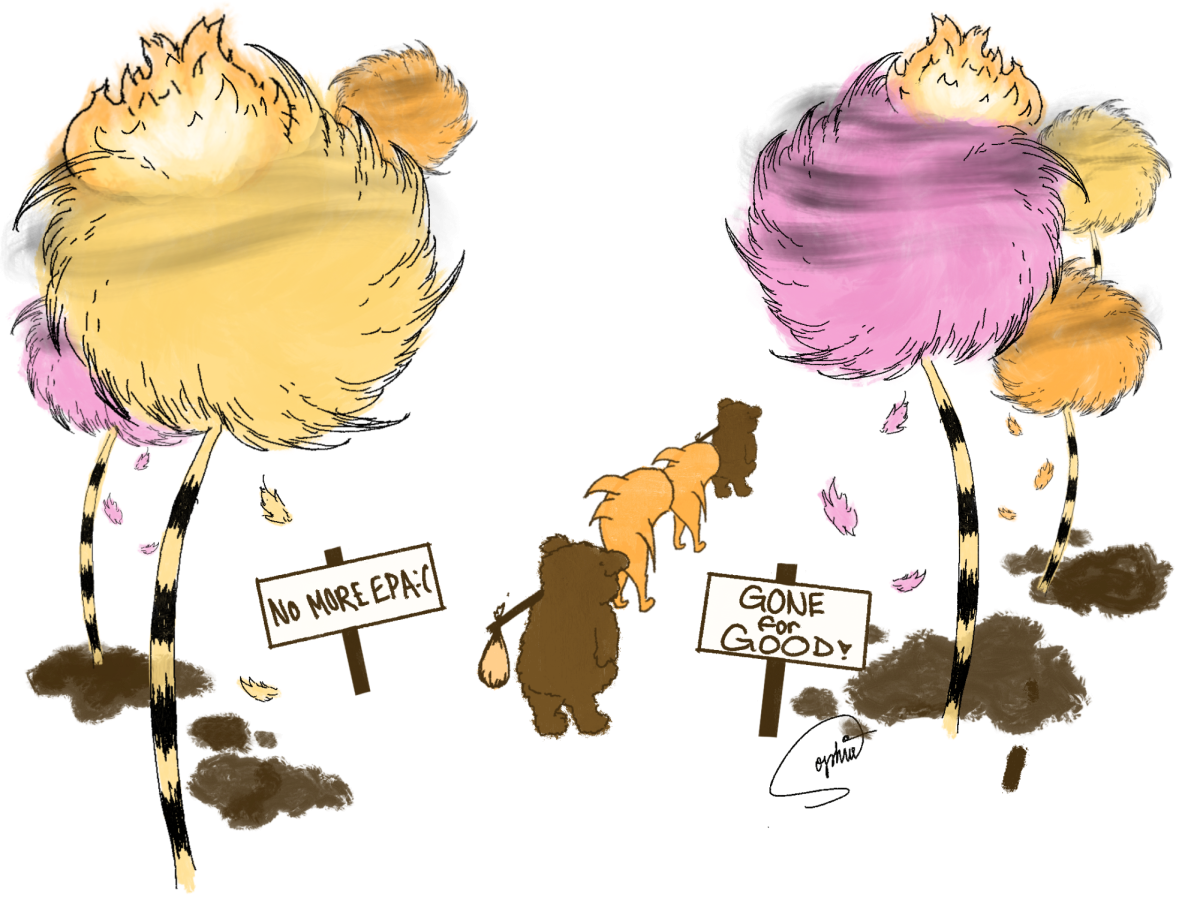
On Feb. 12, Environmental Protection Agency (EPA) director Lee Zeldin announced the most widespread deregulatory action for climate change in American history: the repeal of Endangerment Finding. The 2009 Endangerment Finding is a culmination of research that declared details about the danger of greenhouse gases, providing a legal foundation for regulating emissions under the Clean Air Act. Framed by the administration as an anti-regulatory move, the repeal is dangerous because it contributes to the destruction of public health and environmental protection for economic gain.
In 1970, the Clean Air Act became a federal law. An updated, but crucial aspect of the Clean Air Act was the 2009 Endangerment Finding, identifying carbon dioxide, methane, nitrous oxide, hydrofluorocarbons, perfluorocarbons, and sulfur hexafluoride as threats to public health. According to President Trump, the deregulation was initiated to reduce vehicle prices. He justified that the Endangerment Finding was a “policy that severely damaged the American auto industry and massively drove up prices for American consumers.”
Granted, affordability matters, especially for families already struggling to pay for the increasing living prices.
Trump’s defunding of research and independent science only makes people more unaware of the significance of the deregulation. Under the act, Americans began looking for environmentally friendly fixes, solutions like electric cars. The repeal demonstrates Trump’s shifting focus from more environmentally friendly vehicles to gasoline or diesel powered cars. The last decade contained the hottest years on observational record, and with climate change accelerating, deregulation is a reckless action that will keep us on the dangerous trajectory.
Before the Clean Air Act, the U.S. experienced a series of environmental crises like black palls of smoke lingering over Los Angeles and New York, and fossil-fueled power plant pollution which lead to increased respiratory illnesses. According to the American Lung Association, the impact that climate change has on our lungs is profound. Ozone pollution triggers asthma attacks, worsens lung diseases like Chronic Obstructive Pulmonary Disease (COPD), and heightens the risk of premature death. Children are especially vulnerable as air pollution can slow lung development and increase the likelihood of lifelong respiratory illnesses such as asthma and lung damage.
With the cost of human lives on the line, a short term economic change should not be exchangeable.
The Endangerment Finding’s mandates prevented fatal medical emergencies for the millions of Americans susceptible to heart attacks, asthma attacks, or strokes. Now, with the new director Lee Zeldin’s pro-pollution beliefs, the EPA has lessened its focus on environmental public health risks.
After the repeal, scientists expect more natural disasters fueled by climate change. This could result in decreased quality of life, increased property damage, higher energy costs, and even greater medical costs.
The EPA’s mission statement is to protect human health and the environment. By repealing Endangerment Finding, the EPA will go against its own mission statement by endangering public health.
Article 1, Section 8, Clause 1 of the United States Constitution states that the government has to provide for the common defense and general welfare of the United States. The Clean Air Act’s Endangerment Finding protected Americans from polluted air. The welfare of Americans and our surrounding environment is greatly disrupted by removing the Endangerment Finding initiative.