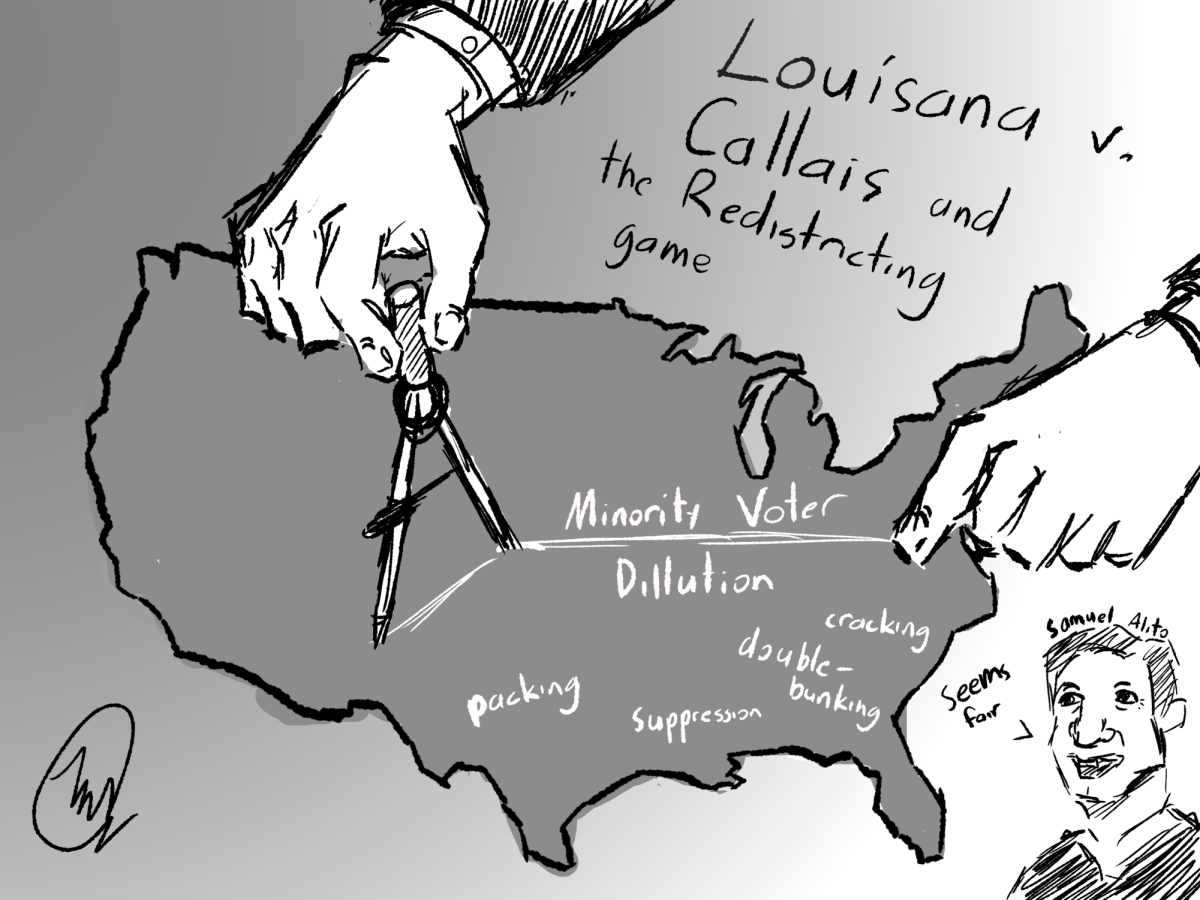

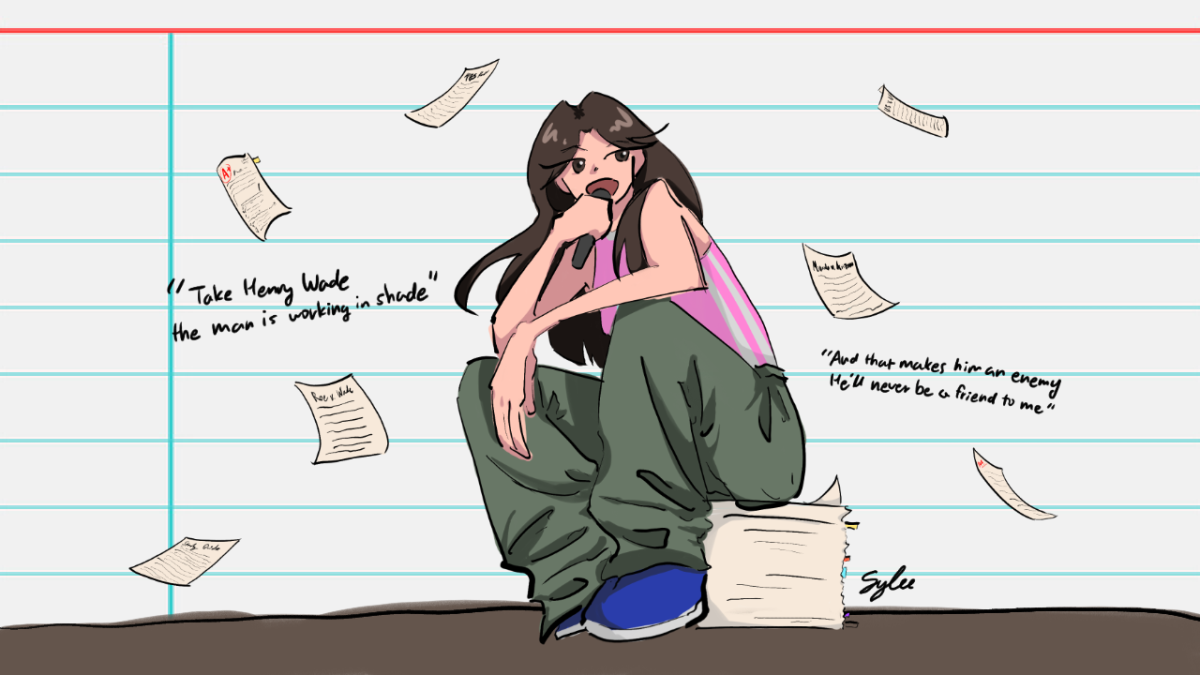
Cracking through the night’s stagnant silence, my room exploded with noise. First, a metronome, then a synth, and finally my own voice. With only hours left before our AP Gov exam, my friend and I searched for a creative way to synthesize the mountains of material. In an epiphany, we began freestyle rapping the case facts, taking turns creating nonsensical rhymes for every case on our list.
Although the countdown to the exam still loomed over our heads, the night of dire studying had been transformed into something different. Laughter bounced off my walls, echoing through my phone screen where my friend sat on FaceTime. I felt lighter than I had in years. Studying by freestyling Supreme Court cases felt like a breath of fresh air.
Much like this, I’ve experimented with eclectic studying methods throughout high school, ranging from freestyling content to delivering essays like speeches. These unconventional study habits have taught me to enjoy the process of learning.
Admittedly, I used to be consumed by toxic study habits. Overcome with nervousness, I’d pour over textbooks and notes until my eyes watered, ingraining surface-level content into my mind while forsaking genuine learning. Quickly, I realized that these ineffective study methods were not beneficial to me. While I may have been able to score well in exams, I hadn’t been truly absorbing the material. In search solely of the optimal letter grade, I had allowed myself to forget the entire purpose of studying: to learn.
Leaping between units, subjects, classes, I chased the elusive 100%, forgetting to absorb the content. Learning was not meaningful for me; it was simply a process to undergo. After tests, the material would wither from my mind, suddenly obsolete in my life. Too quickly, I’d move on to the next topic I’d soon forget as well.
In my junior year, I shifted gears. Realizing that my prior habits of obsessive revision and surface-level comprehension had harmed my mentality and education by sacrificing long-term understanding for numerical results, I sought to make my learning fun. In doing so, I began to raise my head and look above my notebook to absorb what—and who—was around me. To become an effective learner, I had to take my education outside of my textbook, synthesizing learned content with deeper connections.
Sitting across from my father, my eyes flitted from a science worksheet on soil horizons to his snacking. For weeks, I had been unable to memorize the various levels of soil horizons: O, A, E, B, C, and R levels. But across from my father, it struck me that I could create a mnemonic that I wouldn’t forget: Only Andrew Eats Blue Crab Rangoons.
By taking inspiration from what was around me, I found myself able to study more efficiently. Even today, I can remember my soil horizons simply by thinking of my dad. By taking my learning process out into the world I was in, I realized I could reach a deeper level of comprehension. Not only have my unique methods bettered my studying habits, but they have also made learning more fun
Through my strange studying methods, I’ve realized how much joy can exist within learning. By being imaginative in my studying, I’ve learned to enjoy the process of revision, reframing my mentality to emphasize the importance of long-term comprehension instead of short-term test results. My unique study habits have ensured that I can attain a deeper understanding of what I’ve learned, all while having fun. My studying now is punctuated by laughter, color, and contentment—words I once saw as antonyms to studying. Learning is not formulaic or boring; rather, I’ve realized it can be a fulfilling process if I’m willing to go outside the box.
I still get nervous before exams. I still struggle to hit that perfect 100%. But now, I know it isn’t the end destination. After all, looking back on my high school experience, I’ll remember my outlandish freestyles describing Roe v. Wade and Engel v. Vitale, not the grade it translated to. And it’ll be a long while yet until I forget the cases’ facts!