
A steady drum beat filled the quad as the Filipino 2 class took their place. They wore traditional headdresses and held paper candles as they danced, creating a colorful performance in the center of the quad.
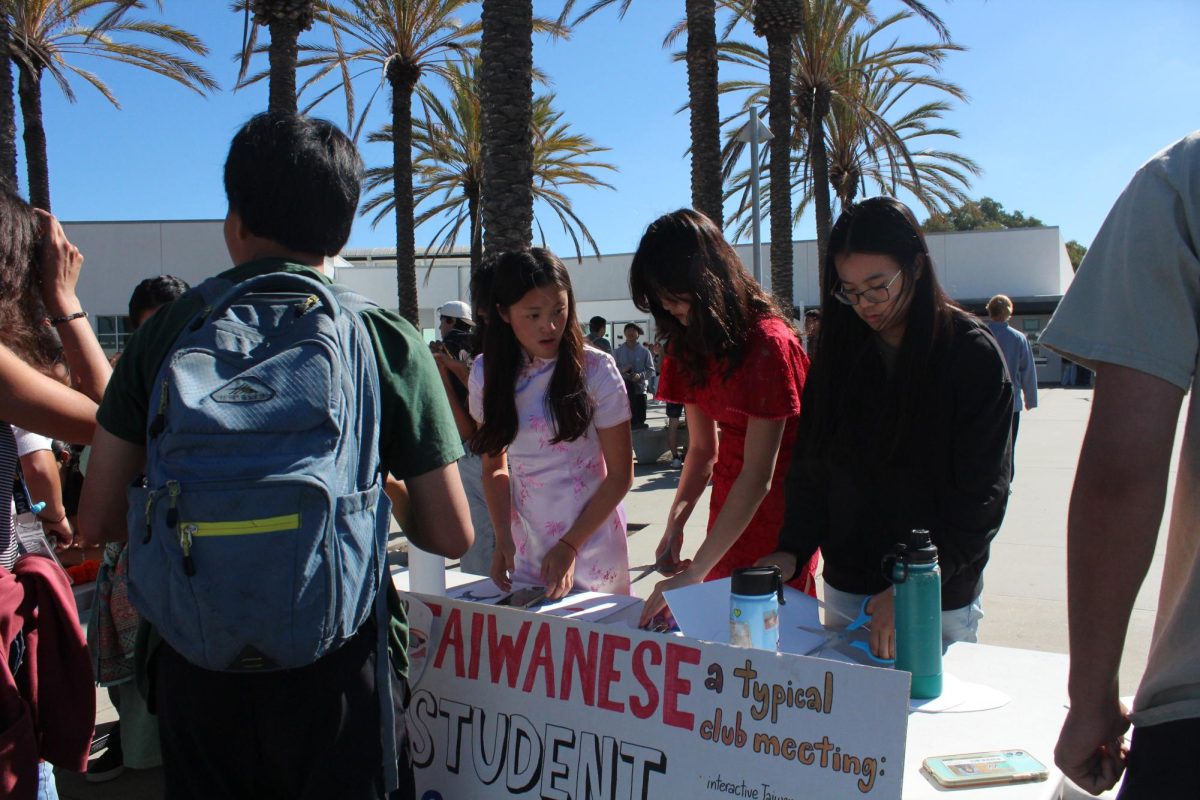
Booths and a watching crowd circled around them. Each table was manned by eager students proudly displaying their culture. Henna, Peking Opera masks, tinikling, and other cultural activities decorated the quad.
Spread across two days with nine participating clubs, the Culture Fair brought students’ traditions to Westview, Nov. 5-6. This event was organized by the ASB Culture/Awareness Committee to teach students about the diverse cultures at Westview. They reached out to each of the cultural clubs and invited them to represent their heritage through activities and traditional performances.
Two of these cultural dances came from the Filipino 2 and the Filipino 6 students. Organized by Jaclyn Brom, the Filipino language teacher, each class performed one dance.
The dance by the Filipino 2 students originated from the Sinulog Festival, which is celebrated in Cebu City, Philippines. The dance mimics the ocean’s waves, showcasing the joy, faith, and unity valued in Filipino culture.
The second dance, performed by the Filipino 6 students, typical during the Masskara Festival in Bacolod City, Philippines, which celebrates the resilience of the city during a time of hardship and famine in the 1980s.
Brom said that as she watched from the crowd, a feeling of accomplishment filled her as she heard the reactions of the other students. They were not only positive, but they also recognized the beauty in Filipino culture.
“When I was among the crowd watching the performance, I could hear students saying things like, ‘Oh my gosh, that’s my friend from this class’ and ‘That’s my classmate from this class,’” she said. “People are seeing my students, not just as their classmate in math, not just as their classmate in English, but more like, ‘Oh, she’s Filipino. This is a beautiful performance. That’s a beautiful culture.’”
For Bezalel Clark (10), a Filipino 6 student, the dance helped him learn more about his culture and what the dance represents for Filipino people.
“[The dance] was a way for us Filipinos to put ourselves out there and make our culture known,” he said. “This Masskara dance we did is a way for us to uplift the spirit of our community no matter the culture, and shake off any negative feelings.”
Clark also said that the experience of performing brought him closer to his classmates allowing him to bond with them because of their shared experience.
“Learning this dance was also exciting because I got the chance to laugh with my classmates,” Clark said. “When we messed up the dance, we were able to build each other up and help each other improve.”
Brom learned of the Culture Fair just a week prior, giving her only five days to teach her students the dance and plan the classes’ performances. She split up the choreography into halves, teaching it over the first two days in class.
After the students learned the dance, Brom created five groups of students to practice for the remaining three days, each with their own student leader.
“Each group had leaders, and everyone who was in the front were the leaders,” Clark said. “The [leaders] were the ones who [helped teach] us to dance. But it’s not just them who are teaching us to dance. We’re all helping each other out as a community and as a family.”
Typically, these dances are accompanied by colorful headdresses. They are very intricate and can be heavy for performers, so Brom had to improvise. Using another traditional method, Brom and her students replicated these headdresses with colored paper.
At this event, sharing culture was exactly what Taiwanese Student Association (TSA) president Leonard Way (12) aimed to do. At their booth, Way had masks from Peking operas, a traditional Chinese theatrical art form, for students to decorate while they learned about Taiwanese culture.
Way started TSA as a way to differentiate Taiwan’s culture from China’s, and after receiving an invitation from the ASB Culture/Awareness Committee, he was excited for the opportunity to educate students on these differences.
“When most people think of Taiwan, they really just think of China,” Way said. “It’s a huge misconception. The main goal was just to get rid of [that misinformation] and make sure that people understand that Taiwan is its own separate country and it has its own culture, it has its own life, its own people, and its own traditions.”
Brom said that teaching others about heritage is important to her and she would love to see more participation from other cultures in events like these.
“I would love to see a Multicultural Fair at Westview,” Brom said. “I have worked here for eight years and I’ve never seen a fair [like that]. Maybe next year we can make it more grand.”