
At the San Diego FIRST Tech Challenge (FTC) Regional Championship on March 7, The Clueless won the Inspire Award, which assesses overall team performance, recognizing teams that excel across technical work, team attributes, outreach, organization and more. The Inspire Award bumped them up 60 points—helping them advance to the First Tech Challenge World Championship in Houston, held April 29 to May 2.
“It was really like a miracle story,” Aiden Lee (10) said. “None of us were sure if we would advance to worlds. And when that actually happened, everyone on the team was shocked. People were crying.”
According to Nikhil Maurya (12), the team’s exemplary performance in outreach awards was what gained them enough advancement points to progress to the World Championship. This included advertising, raising money, connecting with industry, and technical awards, which considered their innovative mechanisms, design portfolio, and efficiency.
Lylia Zheng (10) said the Unity Robotics Initiative they created, where they brought together younger kids to compete in the First Lego League (FLL) robotics competition, played a big factor in this success.
“When we present to younger students, they’re interested in FLL, but they don’t know how to start a team or where to go to do FLL,” she said. “So we created Unity Robotics, where we identify the students from all around the local area. Most times, they don’t have a group of other students that are interested in FLL. So we connect them together to form teams, and then we also mentor them throughout the year. We host events like our mock tournament to give these teams a chance to experience judging and the robot game with another team before they go [to official qualifying tournaments].”
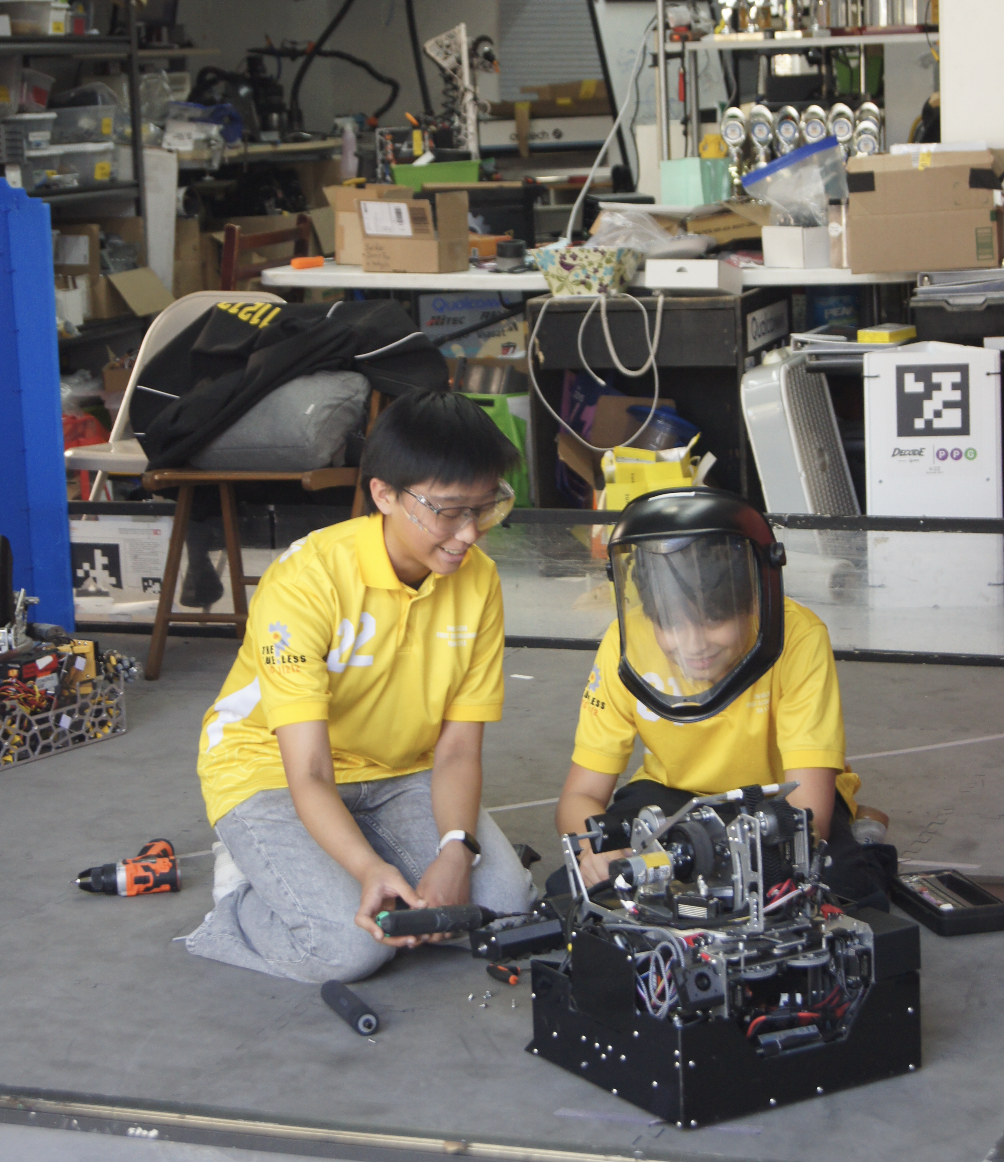
Now that the championship is a month away, Rishi Shah (10) said both the software and hardware teams are now preparing themselves for every possible scenario so they can predict and prevent any issues that might arise.
“We’re adding a grounding strap, which is a way to mitigate static, so that will be helpful,” Shah said. “Also, we’re making sure that we have a lot more testing and are running a lot more real match scenarios, like even in a garage or other places, so we can plan, and if something goes wrong, we know what we can do to fix it for worlds.”
Lee said their current robot is even better than years before.
“We’ve gone through so much more casting, we’ve tried so many new materials, we’ve gone through every single different approach that we can and we were really trying to make sure we have the best chance,” he said.
Even with all of their preparation, Shah said that their performance at the World Championship will be largely unpredictable, prone to factors outside of their control.
“It’s really random, so you could either have a really, really strong division with a lot of other good teams, and we’ll have to play really hard to get out of our division, or we could be in a really easy division with less-competitive teams, and it would play out differently,” he said. “We don’t know how it’s gonna go. What we can do is just make everything the best it can be.”
Maurya said that given the hard work put in by this year’s group, he is extra hopeful about the World Championship.
“I think this team stands a better chance than ever before,” he said. “We do have confidence in our work and that whatever outcome happens, we will be proud of it.”