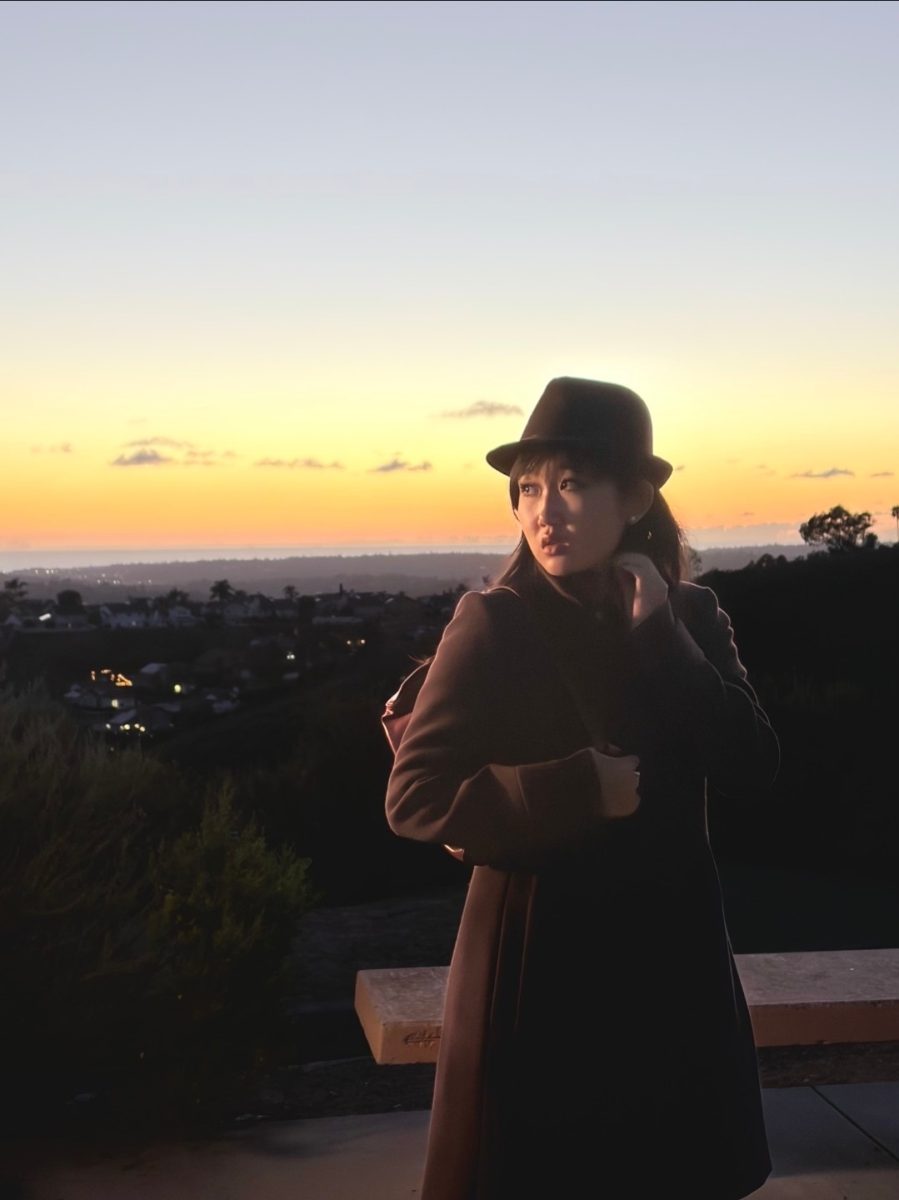

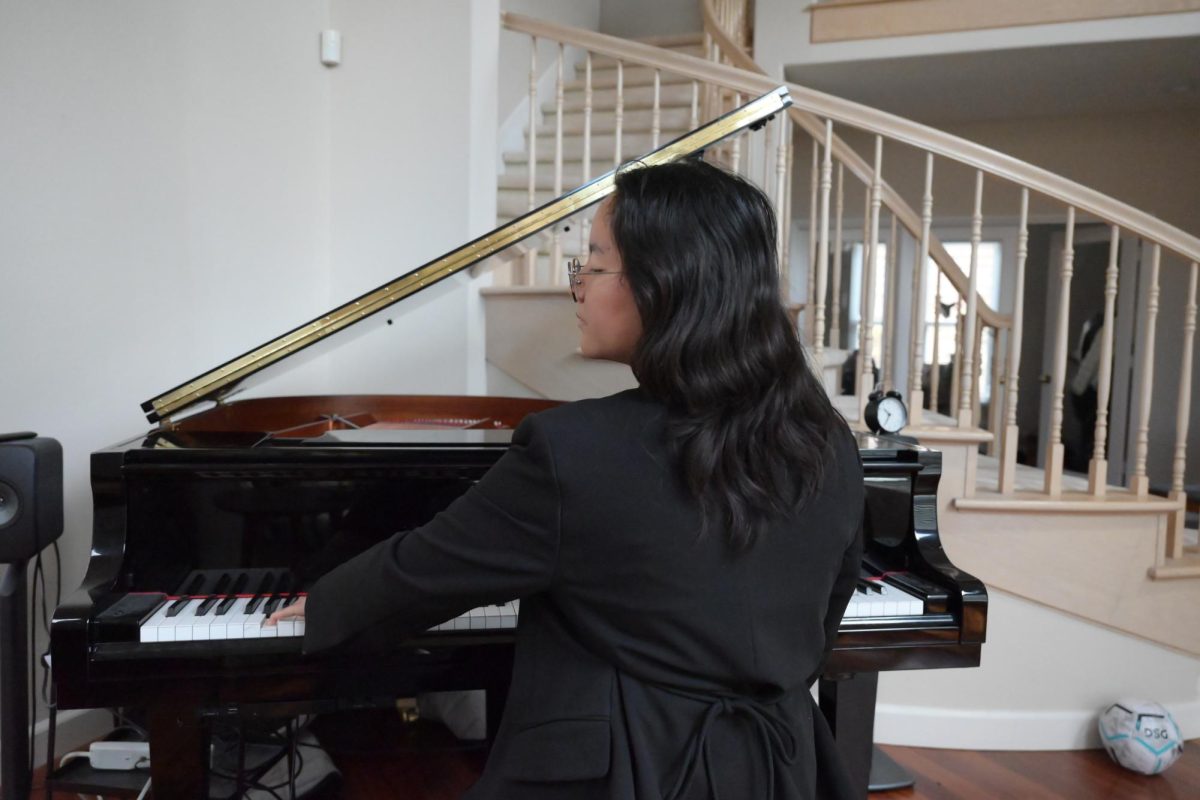
Luna Lee (10) stepped onto the stage of CSU Long Beach, hearing only the echoing click of her heels and the thump of her heart, March 28. She scanned the hall in an attempt to calm down before her performance. Lee smiled, reassuring herself before turning to face the auditorium.
All of the seats were empty except for three judges sitting in the middle. Lee bowed to them and took her seat.
She placed her feet on the pedals, feeling the surface of the piano under her fingers before taking a deep breath.
Lee looked at her accompanist and nodded, cueing her to start. She heard the piano begin, waiting two bars before her entrance.
Then, her piece started. She held her breath for the first arpeggio, when each note of a chord is played quickly after one another rather than all at one time.
Lee’s adrenaline flowed through her fingers as she played each note, matching the energetic emotion of the beginning section. As the piece continued, she became comfortable with the piano and the hall’s acoustics.
Her surroundings blurred, and her focus shifted entirely to the music. Each passage she finished sent a small wave of accomplishment over her.
She felt the burn in her arms and the sweat on her face, but refused to stop. Lee poured her heart into the concerto, adding nuanced emotion to each measure. Lee let herself give in to the music, allowing the sway of the notes to guide her fingers.
As the final section of the concerto finished, Lee lifted her hands from the piano. She turned to bow to the judges with a smile of relief and elation.
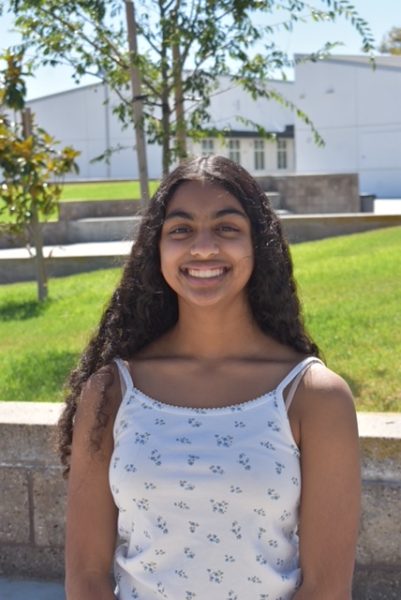
Lee walked out of the hall and was greeted by her piano teacher and one of her friends, Sage Taylor (11).
Both Lee and Taylor competed in the concerto section of the Piano Concerto and Solo Competition organized by the Music Teachers’ Association of California.
When the results came out, Lee won first place, and Taylor won third out of 20 competitors from all over Southern California
The Piano Concerto and Solo competition consisted of two sections: a solo piece and a concerto, where the pianist plays a classical solo piece that is also accompanied by an orchestra. However, for budding pianists like Taylor and Lee, there is typically only a single accompanist who plays along with them.
Pianists, ages 16-18, from all over Southern California drove to CSU Long Beach to participate in the Piano Concerto and Solo competition.
At such a prestigious competition, Taylor had to ensure his piece, the Mendelssohn Piano Concerto, would sound perfect. However, the date of the competition aligned with finals week, which impaired his practice time.
“I was really stressed,” Taylor said. “I almost dropped out of the competition. I had my lesson on Thursday, the competition was on Saturday, and I kept [messing up]. Mentally, I was kind of screwed up because of all of the finals, I couldn’t really play. I hadn’t practiced [as much] before, so I wasn’t playing [great]. My teacher said ‘Are you sure you still want to do this?’ But I didn’t want to give up.”
Lee also had to manage her practice time because she had a competition just two weeks earlier, leaving her only two weeks to completely polish her concerto.
“I was cramming it,” Lee said. “I felt really stressed through [the process] because I didn’t think two weeks were enough for me to prepare a full performance. Since the other competition was all recordings, it ran a little late, and my schedule got all messed up.”
Although Taylor had already played his concerto in a previous competition, he hadn’t done well, adding to his anxiety.
“I’ve always been at the very bottom,” he said. “I’ve either been last or seconds to last. [In other competitions, it’s] never gone well for me. This competition was the first time I actually got recognized. It’s a great feeling.”
Taylor started piano when he was in elementary school, but said he never particularly cared for it and quit shortly after. He picked up the hobby again during quarantine and discovered his love for piano.
“When I started playing piano over the pandemic, it started just as a thing to do to pass the time,” Taylor said. “Since I started learning on my own, I got to do whatever I wanted and learn whatever I felt like learning. That’s how I found the types of music that I really enjoyed and it only grew from there.”
Unlike Taylor, Lee has been playing her whole life, almost 11 years, but her passion for piano wasn’t as strong before as it is now.
When Lee lived in Korea, she said she mainly played because she knew she was good at it.
“I’ve been playing piano since I was 5 and when I started, I only liked it because of the compliments [I received],” Lee said. “I went to a few amateur competitions and won a few of them when I was 7 or 8. That made me feel really good about myself and made me feel like I was worth something.”
Lee then enrolled in an intensive piano program in Korea when she was 9 years old. However, upon joining, she discovered overqualified peers which made her feel discouraged.
“That’s when I discovered there were countless people who are so much better than me, who can play so many more pieces than me, who can sound so much better than me,” Lee said. “That really broke my ego. My ego was high up there because I’d been winning things, I’d been getting lots of compliments from adults and I’d always been told that I was talented. When I went to that very intensive music program, I felt like I was at rock bottom. I almost quit playing piano in sixth grade [because of that].”
When Lee moved to the United States, she met her current piano teacher, whom she said revived her love for piano, allowing her to return even stronger than before.
“[My teacher] is a very open person,” Lee said. “He was very open to me just playing [piano] as a hobby. He was very willing to guide me through any path I wanted, and that made me feel very welcome to the world of classical music. Back in Korea, I felt that I had to be the best all the time to succeed in classical music. I felt like I only had one choice in my life, and I didn’t feel good enough to achieve that path, so I was thinking to myself, ‘Why not just quit? This isn’t going to work out anyway.’ Then, when I came [to the United States], I was really welcomed by my teacher. I genuinely started to develop a love for this kind of music and this form of art as I was guided by my current teacher. It’s become a really big part of my life now, and I can’t imagine myself without playing piano.”
Taylor felt the same way. Although he couldn’t practice as much as he wanted to before the competition, he still wanted to showcase his abilities.
“I was exhausted after finals, but I just tried to push through,” Taylor said. “[I did] really intense practice. I tried to be very methodical because I had to make up for the entire week. I practiced very slowly with a metronome and focused on every note to really lock the piece into my hands. It was slow and repetitive, but very structured and intentional. I was thinking, ‘However this goes, you know, I’ve done it. I’m not gonna give up.’”
Taylor tried to keep the same mindset during his performance, however, his nervousness on the day of the competition prevented him from staying as calm as he had hoped.
“My headspace is horrible doing performances,” Taylor said. “It was partially nerves, but I went in over my head. I try to be in control, but when I overcomplicate things, it becomes an obstacle. When it’s going bad, it’s almost better, because you’re like, ‘Oh, it’s fine, I’ll just play [through] it.’ [My performance] started well, but then I started to freak out [and think] ‘This is actually going too well’ I was stressed and overthinking. But, it didn’t blow up the same way I was afraid it would. By the end, I was [thinking], ‘Oh, my god. I actually did it.’ In the moment, it felt stressful and slow, but [at] the end, it felt like a blur.”
Taylor said it felt amazing to be recognized at third place after only playing piano for five years, and that he was relieved his hard work truly paid off.
“Since I had never been recognized at a competition up to this point, I never quite felt like I was at the same level as everyone else from how late I started,” Taylor said. “The recognition was very validating at a time where I was questioning if I even deserved to go to this competition. To receive third place was such an incredible feeling because it proved to me that all the work I put in meant something.”
For Lee, who won first place in the concerto division, this moment was one she had been waiting for.
“I remember [the moment] very clearly because usually on Tuesdays, I have lessons with my teacher,” Lee said. “[My teacher] called me when our lesson time would usually be, and I was freaking out because I thought we actually had a lesson. He just tells me, ‘Luna, I’ve been waiting to tell you this, and now I can finally tell you. You won the competition. You made it to your breakthrough moment.’”
Despite the encouragement from Lee’s teacher, the pressure of winning still loomed above her. She knew she would have to work harder if she hoped to pursue a career in music.
“College auditions are coming up in two years, and I remember thinking, ‘If I’m not getting first right now in these regional, county competitions, then how am I gonna compete with national level artists during auditions?’” Lee said. “I was stressed about it a lot. When I found out that I received first place for this competition, it didn’t click to me at first. I thought I was hearing things wrong. When I got the confirmation that I actually won, I couldn’t believe it for a good three hours. I was just really surprised by the results, and at the same time, very happy. I’m really glad that I have gotten the chance to achieve that and go further.”
After playing her piece on the day of the competition, Lee said she felt truly proud of the performance she put out.
“I was smiling when I finished my performance,” Lee said. “Not because I knew I won the competition, but solely because I was happy with my performance. I was happy that all the hard work had finally paid off in this one performance and that I got a chance to deliver a dramatic narrative to the judges. I made a few mistakes, cracked a few notes. There’s always something you can do to make a performance better, no matter how well you did. But despite all that, I was just glad about my ability to perform this piece. I really gave it my heart and soul.”