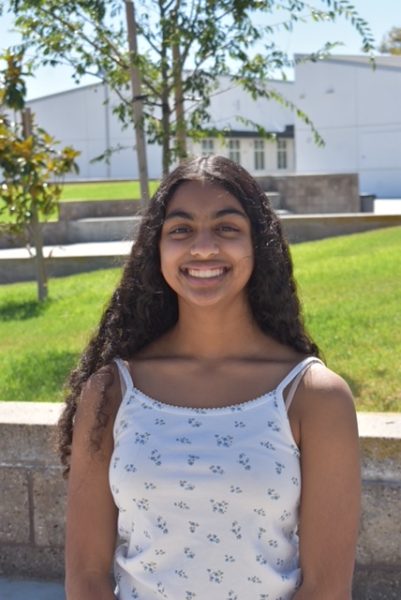
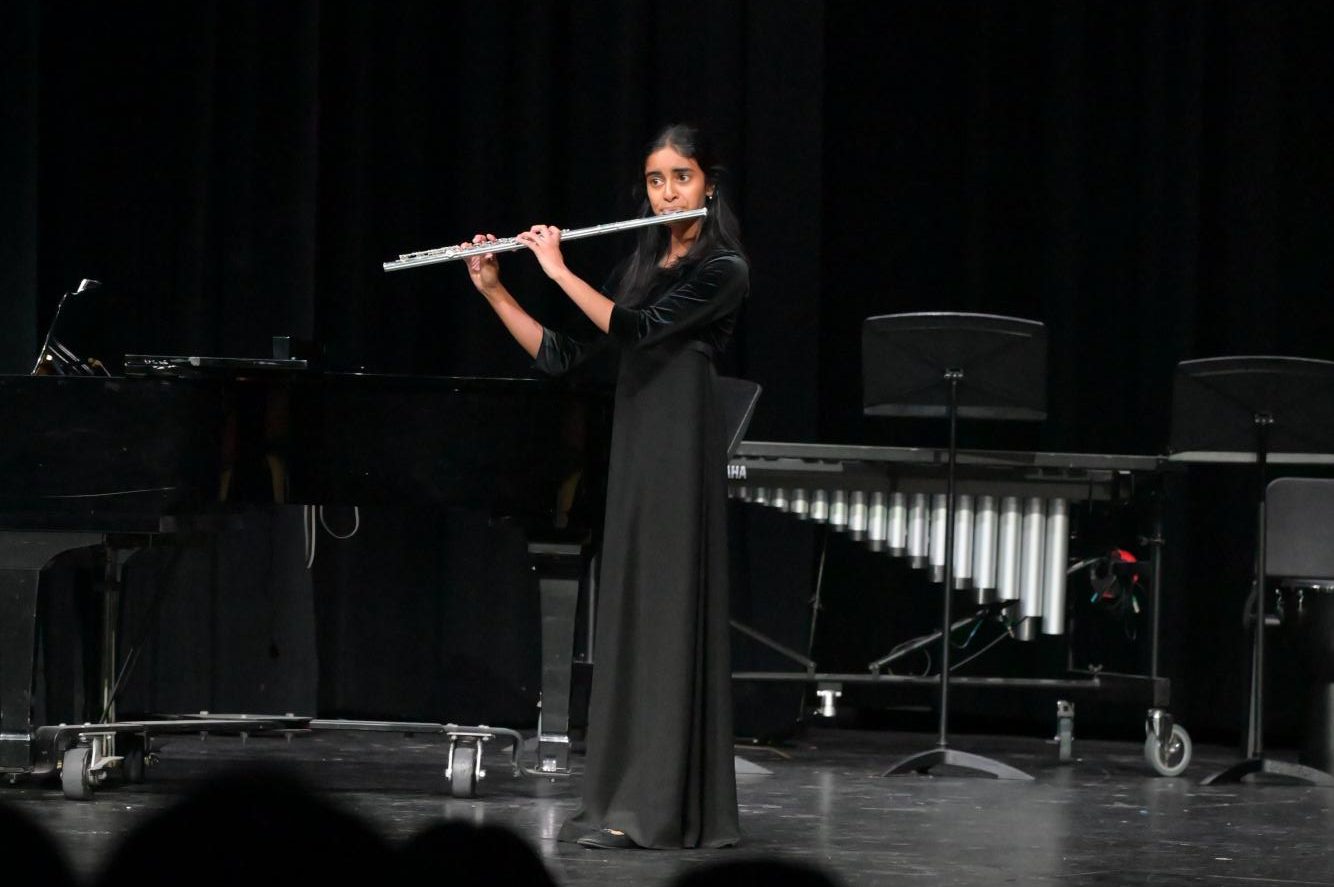
The delicate melody from Rashmi Chelliserry’s (12) flute filled the NPR recording studio, Nov. 7. Every phrase of the traditional Hindi ghazal Chelliserry delivered an intimate musical narrative, dedicated to a unique person in her life: her meditation guide. The performance, hand-crafted for the meditation guide, was broadcast across the nation as a part of NPR’s branch, From the Top.
Chelliserry was selected as one of the five San Diego musicians for the Learning and Media Lab Fellowship. This program is organized by From the Top, an independent non-profit organization that directly partners with NPR for weekly broadcasts. The six-week program was an online curriculum for students under 18 to learn about storytelling as an artist and explore career opportunities in the arts, audio production, community engagement, and more.
“We spoke with audio engineers and professionals about studio recording and production,” Chelliserry said. “We also spoke to guest artists and learned about different careers for musicians. Another part of the fellowship was planning and creating our own community engagement project, which was our final capstone project. We identified somebody in our life we don’t know very well, and we interviewed them to get to know them [better]. Then, we had to create a unique, handcrafted concert for them based on what they like.”
The community engagement project encouraged young musicians to step out of their comfort zones. Chelliserry said she dedicated her performance to her meditation guide to deepen her connection with a special person in her life.
“I chose my meditation guide, who [is] a unique adult in my life,” Chelliserry said. “She has guided me through hard times of my life through yoga and meditation. After talking to her, I found out she liked country music and hymns, so I played a Hindi ghazal for her. I also played a country ballad, “I Will Always Love You,” by Dolly Parton, and the Reineke Flute Concerto, which is one of my favorite pieces in the flute repertoire, because I thought it fit the dreamy vibe.”
This project brought challenges to Chelliserry as well as many other musicians, such as having to transcribe music for their instrument.
“The community engagement project was fun because I had to choose music that didn’t have a flute [music score],” she said. “I would listen to them over and over again to create my own cover of the piece. The Hindi ghazal was especially interesting [because] I don’t even understand Hindi, and there was no flute music for it. I thought it was cool that I got to perform pieces that had meaning to her, and it connected us through music.”
Through the process of learning the music from scratch, Chelliserry was able to create a truly unique concert program for just one person. Chelliserry said she appreciated getting to know someone who mattered in her life better through this one-of-a-kind process.
“I knew her only through meditation,” Chelliserry said. “I didn’t really know her outside of that part of my life, so I thought it would be cool to get to know her likes and her hobbies, and through that, I also learned a lot of things about her life. She likes woodworking, cooking, and mystery movies.”
Although the program guided the musicians, Chelliserry said that it allowed her to reflect on what music meant to her.
“[The program] made me think about music in a different way,” she said. “It’s not just about me playing something for other people to listen to, it’s about connecting with them. For example, if I had just played a bunch of difficult pieces, we wouldn’t have connected on the same level as me playing a piece that had personal meaning to her. Now when I think about music and performing, it’s more about connecting and telling a story through your music and not just playing the notes on the page.”
Chelliserry said she was also able to apply what she learned from the program to her own vision for the future.
“I found [the program] really valuable because this came at a point in my life where I wasn’t sure how I was going to take music forward going into college,” she said. “Getting to talk to music professionals who [pursued] music in unique ways helped me reflect and think about what music means in my own life and how I want to take it forward.”
Despite not pursuing a professional music career, Chelliserry hopes to keep it in her life after nine years of playing. Ever since she was young, music had been a huge part of her life, influenced by her sister’s shared passion for the flute.
“There is a happiness that comes with picking up the flute and making music,” Chelliserry said. “Just like how when you read a book, you’re immersed in that world—when I play music, that’s how I [feel]. There are so many things you’re thinking about, like articulation, dynamics, playing the right notes, mood of the piece, composer’s intent, and [more]. Then you think about how you can communicate that to the listeners in a way that even non-musicians can feel and understand. Every day, there are different things to focus on, and there is just so much to bring out of music.”
Another part of the program that Chelliserry said she appreciated was the community she found.
“It was really cool to be part of a group of teens who care so much about music,” Chelliserry said. “You could have these groups in your [school] community, but the level of these people who have also spent a lot of time practicing, a lot of time immersed in music, and the kind of conversations we have were just different. It felt like a big honor to be a part of that group.”
While being surrounded by such peers was a special experience, Chelliserry said she felt out of place at times among such talented musicians.
“I experienced a bit of imposter syndrome [during] the program,” Chelliserry said. “There was a time when all the San Diego musicians heard each other during a rehearsal before the recording session, and it made me think, ‘wow, these are really the most talented musicians in San Diego.’ It made me [wonder] if I belong here in the first place.”
However, Chelliserry was determined to overcome this mental challenge by confronting it and reassuring herself of her own abilities.
“Instead of letting that hold me [back], I realized that the [crew] identified me as one of these people, as a part of this group,” she said. “I told myself that I should be honored and humble, and that I do belong here. Doubting myself is not going to help me. I was also thinking, how I see the [other musicians] must be how other people see me.”
Chelliserry said overcoming these conflicts is an important part of what pushes her growth as a musician.
“Music is a really powerful tool that allows you to express yourself,” Chelliserry said. “I know some people do that through writing, singing, and a lot of different [things], and for me, that’s through flute playing. I’m able to come out through hard times, and no matter how I feel at a certain [moment], I’m able to express that when I play music.”