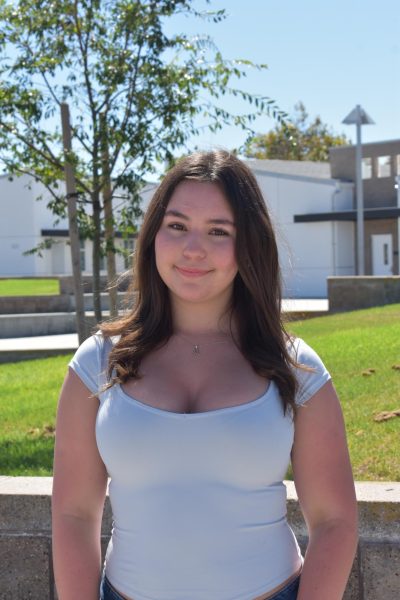

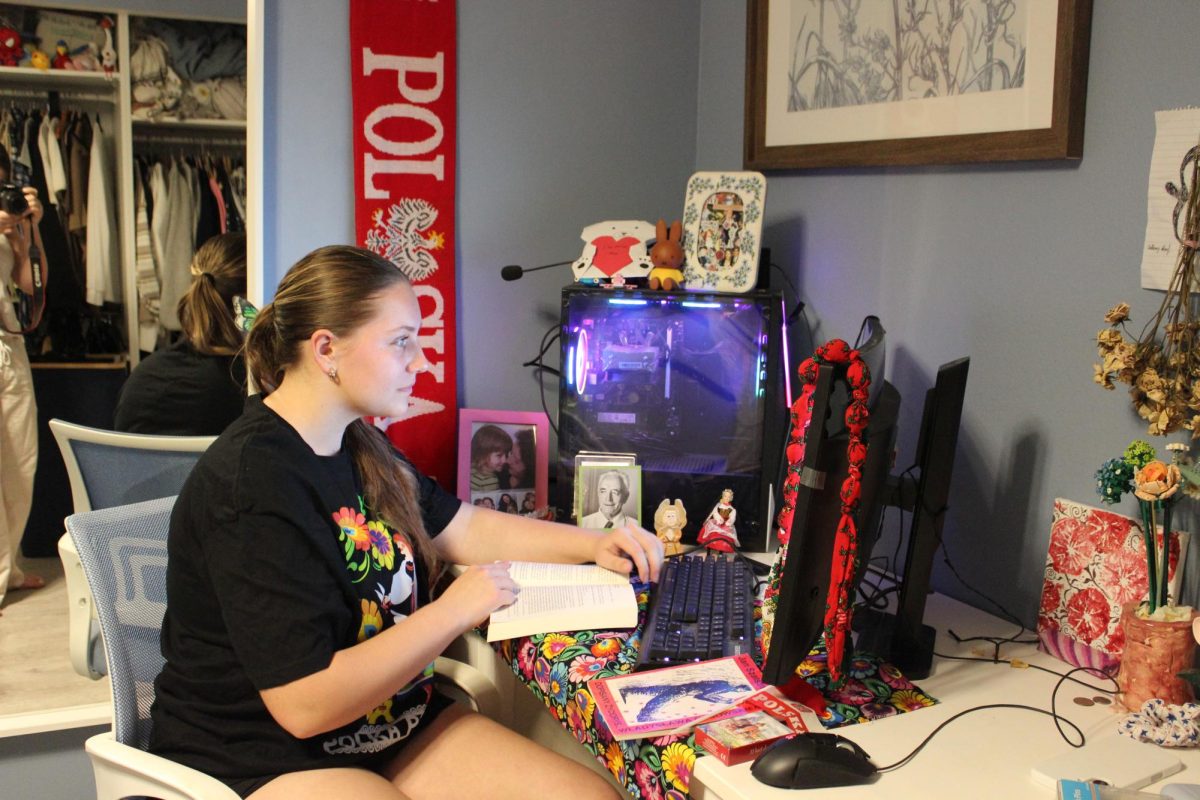
After a month-long trip to Poland, her family’s home country, Lisa Borowick (11) returned home feeling inspired and more connected to her culture. While there, she met her relatives who told stories of her great-grandfather. Back home, he remained in her thoughts, and she decided to preserve his memory by writing a book about him.
“I visited my great aunt, who is the daughter of my great-grandfather, and she told me about his whole life and those small details that I didn’t know about him,” Borowick said. “I already knew that he saved lives, but I didn’t know how many or the full story. I didn’t know that he was actually famous in Poland for being a national war hero. He has a documentary on him, books written on him, and I wanted to write my own version of the story from someone in his family.”
While writing a book has always been one of Borowick’s dreams, she was motivated and touched by her great-grandfather’s story. She said that while he had a hard life, he sacrificed himself time and again to save lives during the Polish-Russian war.
“My great-grandpa’s biography is very long,” Borowick said. “He grew up in a very small village on the outskirts of Poland, and was working to support his family, because he did not have a father. He found out that there were officers who were being sent to prisons and Gulags in Russia during the Polish-Russian war, so he went to the borders to help soldiers cross back and forth from 14 to 17 years old. In total, he saved 121 lives by helping these people cross over in just a few years.”
However, in the process of helping others, he found himself in trouble.
“At 18, he was caught while helping a general escape, and he was sent to a concentration camp in Siberia,” Borowick said. “He stayed there for 32 years, then, when the Soviet Union was experiencing a famine, he was sent back and filed for asylum in Poland. During Perestroika, after the Soviet Union fell apart, he was finally able to get back to Poland, and he became a renowned Purple Heart veteran. He is considered one of the top war heroes of all time in Poland.”
Borowick has begun the writing process and has had help from her mother, who knows more of the family’s history, Borowick says that although she is still in the earlier stages of writing, she plans to publish in August.
“I’ve started writing my first chapters, and I work a lot with my mom because she tells me more stories that I include,” Borowick said. “My goal is to publish before August, so I’m trying to dial in this summer and perfect this. My publisher is Marianna Goreiova, and she’s completely self-made. I know her through my mother. She was initially a professor of Russian literature, and she has a Russian school at UCSD where she gives lessons in Russian to kids. She started publishing books about Russian culture and art. I talk to her about my ideas, how to progress the book, and how to finish it off, especially because wrapping the book up is the hardest part.”
Borowick understands that she doesn’t have a large platform to advertise her book, and while she is hoping to get it out where people can read it, she initially wanted to write it for herself to get in touch with her culture and challenge herself with a project she would enjoy.
“It would be so cool and flattering if people read my book, but mostly it’s for myself,” Borowick said. “It’s to see what I can do. Since I was younger, I’ve always wanted to write a book, and I’ve always loved writing, but I never knew where to start. In all my English classes, I love when we have units on narration and creative writing. Now I really want to challenge myself and push myself culturally to understand the Polish side of my family.”
While writing an entire book was initially daunting, Borowick has been preparing herself by taking writing courses.
“I did a summer writing course at SDSU, and I’ve taken challenging courses like Honors English, Honors Humanities, and Honors American Literature to hone my writing skills,” Borowick said.
Since Borowick has never met her great-grandfather, she relies on her mother and great aunt to help fill in the details of his life.
“My great aunt told me about how the Gulag was [for] her father, and [how] it was a prison,” Borowick said. “My mom was very close with my great-grandfather, he was her fatherly figure, and she loved him a lot and has many stories about him.”
Borowick said she felt that writing this story has given her a connection to her Polish identity.
“His story makes me think about my heritage and my culture,” Borowick said. “ So I’ve always tried to understand my family heritage, because I really do want to stick with my family values and family traditions, and I hope to keep my language alive. I speak Polish, I understand Polish, I can read Polish, but I can’t write in Polish very well. I don’t feel as tied to the Polish side of me as I do with the Russian side. We celebrate a lot of Russian traditions, we eat a lot of Russian food at home, but we don’t really do the Polish side as much, and I really want to bring that back in my life, which is what writing this book has helped me do.”