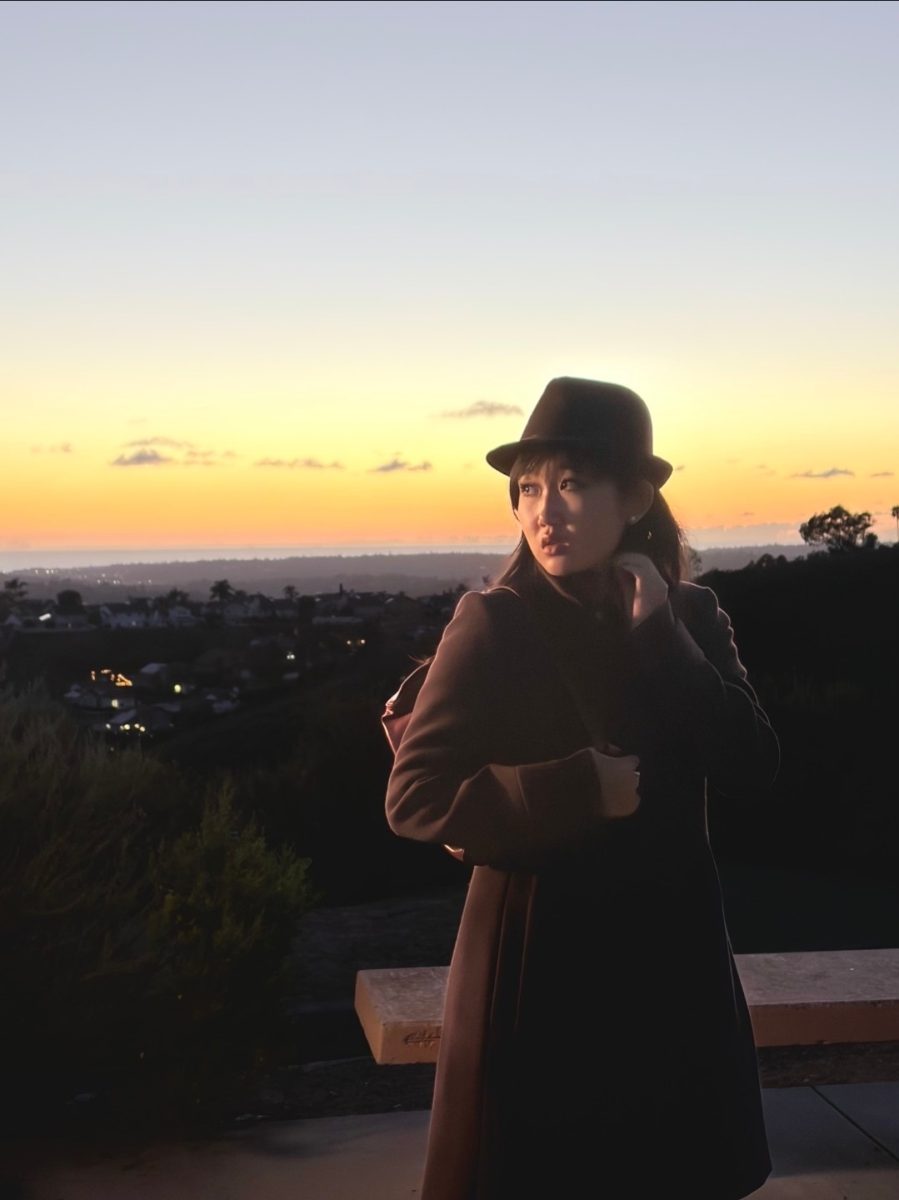

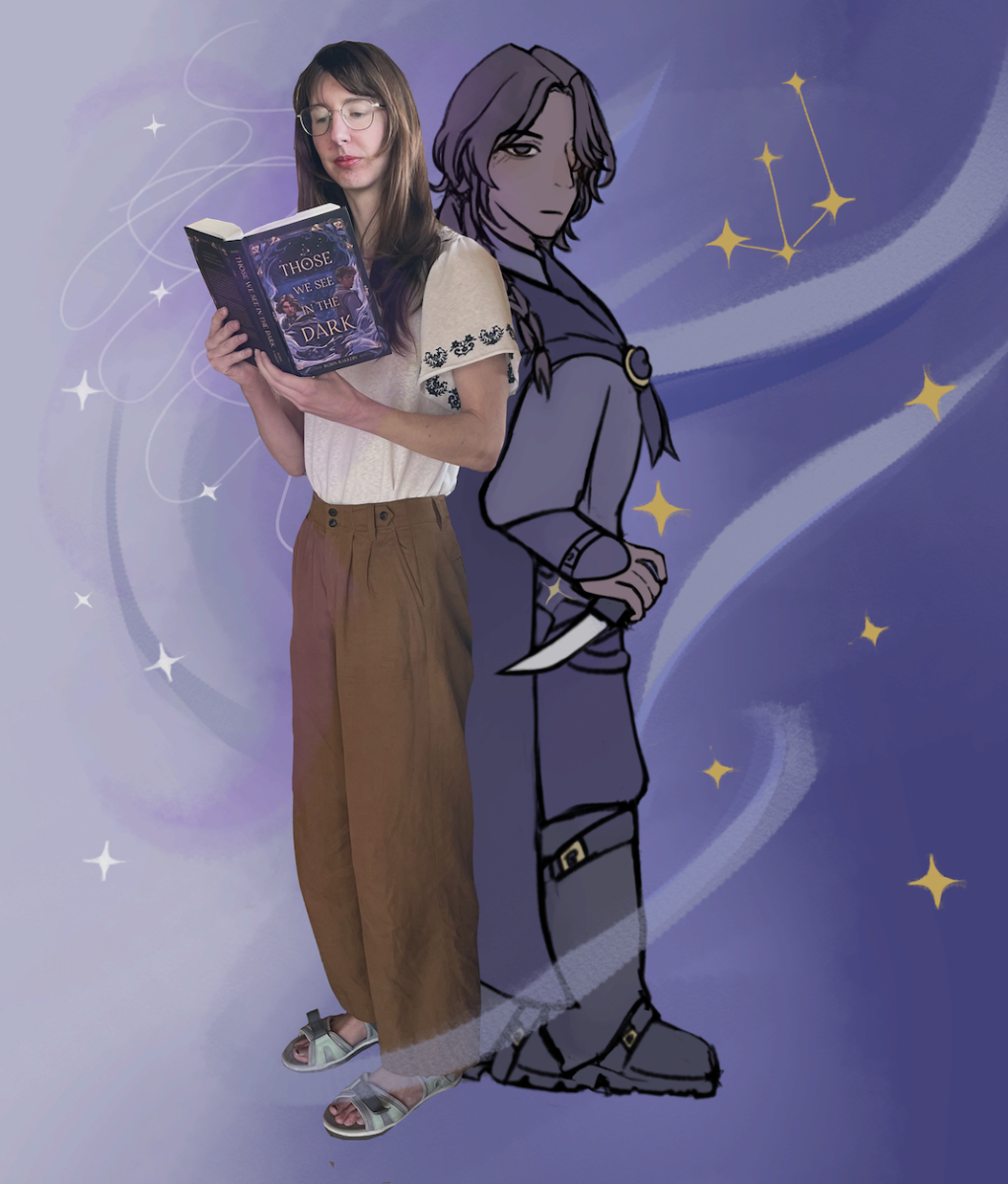
Westview alumna Robin Rakkeby (’11) was hiking alongside the World War II heritage sites and concrete bunkers at Godley Head Circuit in Christchurch, New Zealand, when inspiration struck her for her young-adult fantasy novel, Those We See In The Dark, while exchanging book ideas with her friend.
Those We See In The Dark, published Oct. 2, is the first book in her series, Legend of Takaniim. Rakkeby worked on this novel for three and a half years, the idea originating after she returned to the United States in 2021. She spent time throughout Europe and Oceania, traveling and studying new languages. With the lingering memories of traveling, she pieced together ideas for an opening sequence, but also took inspiration from places she visited, and made similar fictional places in her book. In the midst of the Covid-19 pandemic, Rakkeby realized that she could capture the disorder of the world through her writing.
“When I came back to the U.S., the world was so chaotic, and I just wanted to write [my feelings] out,” Rakkeby said. “It’s kind of surreal because I never thought that being an author was something that I could actually do. It wasn’t until a few years ago that I considered writing a book and also discovered the process of editing, cover design, formatting, and eventually getting it published and out there.”
In her book, the main character, Anaís Dí Sona, is an assassin who often becomes overworked with the tyrannical rule occurring in her kingdom. Rakkeby said she felt similarly overwhelmed in 2021 when she wrote her character.
“Anaís, she is overwhelmed and weary of everything that’s happening within the kingdom; she just wants to take a break but can’t because she has to keep moving forward,” Rakkeby said. “For me, during the time of COVID and moving back to the U.S., I was feeling locked down and similar to how she felt.”
In Those We See In The Dark, Anaís Dí Sona faces the difficult truth that she had been deceived her entire life.
“The big message of the book is, ‘Just because a norm is deemed to be true, that doesn’t necessarily mean that it’s actually true,’” Rakkeby said. “It leads to the fact that you have to unearth and discover things for yourself.”
The writing process for Rakkeby began with an idea and a simple rough draft, which she serves as a way for her to map out how she wants specific scenes to play out.
“Usually I’ll have a very well thought-out scene that acts as an anchor, and then I begin writing up towards the moment of the idea or event that I had beforehand,” Rakkeby said. “There’s a lot of creativity in being a writer, but it can also be frustrating and take a lot of problem solving—whether that [is] wrangling the plot, editing a scene, or refining character motives. That said, it’s so exciting when an idea hits me out of the blue and solves all the problems in a scene I’m struggling with.”
Rakkeby said that though she ran into writer’s blocks, taking breaks talking out her ideas with a friend, and reading books, helped her reassess what she was trying to portray.
“Whenever [writer’s block] happens, I get really stuck because I feel like I’ve boxed myself into a corner, but sometimes pushing through and making it [imperfect], then getting out of my own head and talking it out with someone helps create something more meaningful,” Rakkeby said. “I think it’s important for writers to read books or watch movies that inspire them. Exploring different genres helps a lot [with writer’s block]. I write fantasy and sci-fi, but sometimes all it takes is a good classic or a murder mystery to get me unstuck again.”
For Rakkeby, writing serves as an outlet for emotions and exploring other forms of her craft, allowing her to find friends of similar interests and grow as an individual.
“Life shapes my writing more than writing shapes my experiences, though writing certainly helps me process emotions and experiences,” Rakkeby said. “Writing has helped me through some dark times, and has a strange way of tearing down the walls I’ve built up without tearing me down [completely]. It’s also led me to some of my best friends, first through social media and then in person at various writing retreats. The act of writing can feel very lonely, but the writing community is vibrant and there’s a place for everyone.”